Why your pool heats slowly or never reaches the set temperature
First check how much the temperature actually changes over several hours, whether enough water flows through the heater and whether the pool is covered. Wind and evaporation can remove much of the heat even when the heater is working correctly.
Written and edited by: Pool Explained editorial team
Calculate how much heat the water needs
Raising one cubic metre of water by 1°C takes about 1.16 kWh of heat, before heat losses. Raising 40 m³ by 5°C therefore needs at least approximately 232 kWh of heat.
Compare that energy requirement with the unit's actual heat output, not just the highest rating in the model name. Heat pump output falls in colder air, while solar heating depends on the sunlight available.
Use the same thermometer in the same place and at the same time of day. Running a heater briefly is not enough to establish that it is faulty.
Reduce heat loss from the surface
Evaporation is usually the largest source of heat loss from an outdoor pool, and wind speeds it up. A cover is especially useful at night and whenever the pool is unused, because it limits evaporation across the surface.
Check whether the temperature you want is realistic for your climate, season and pattern of use. An uncovered pool exposed to wind may lose much of the day's heating overnight.
Check water flow and the heater's messages
Clean the baskets and filter as instructed and check the valve positions. Too little flow can reduce heat transfer or trigger the heater's safety shutdown.
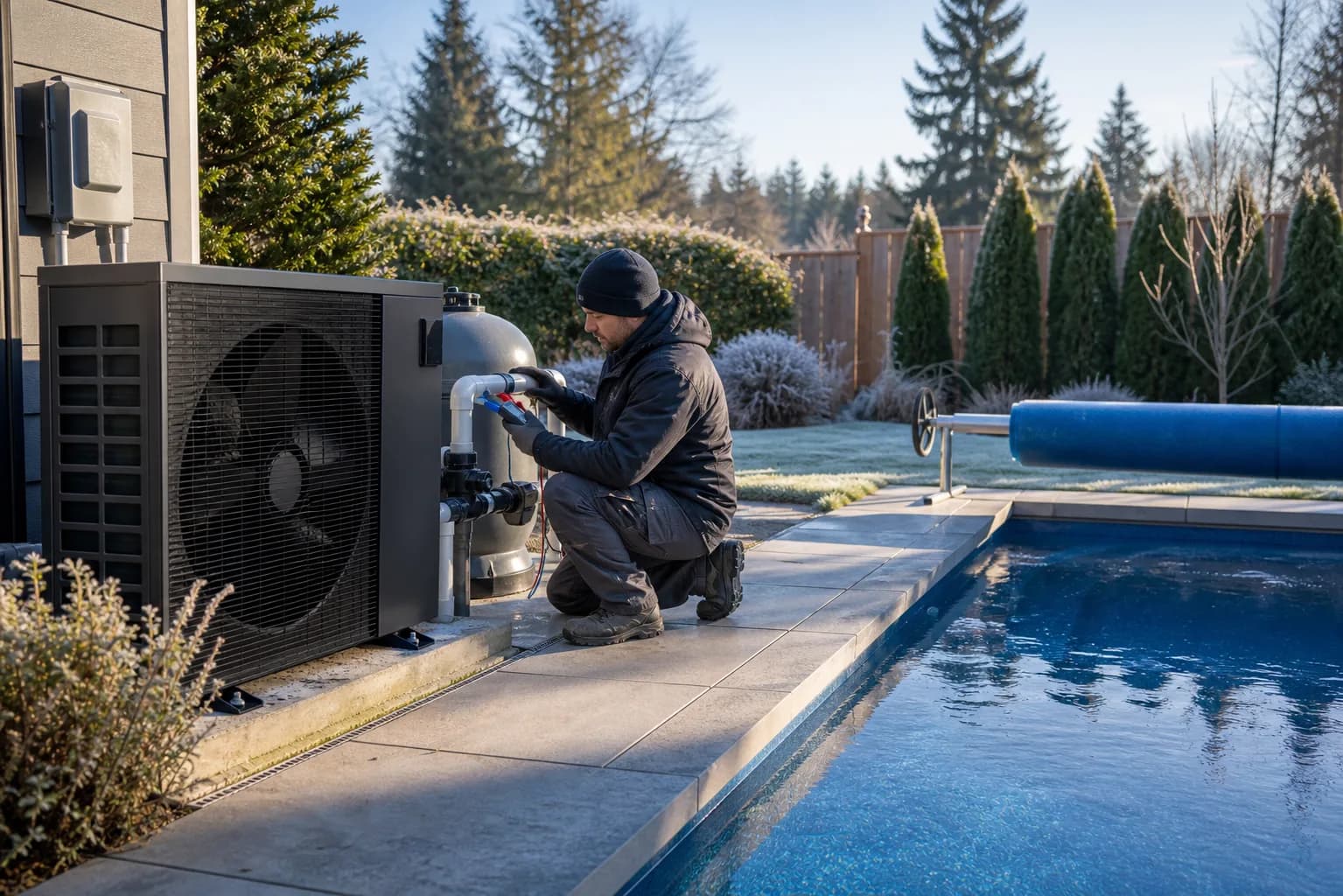
Record inlet and outlet water temperatures, air temperature, run time and any messages on the unit. A brief defrost cycle can be normal for a heat pump, but persistent ice, recurring fault codes or unusual noise warrant a service call.
Do not open gas, electrical or refrigerant components or bypass safety devices. Give your readings to the technician so they can distinguish a flow, settings or sizing problem from a fault in the unit itself.