
There is no universal rule that a home pool pump must run for exactly 6, 8 or 12 hours. For a starting calculation, divide pool volume by the actual flow through the filter. If the pool holds 30 m³ and the system really delivers 6 m³/h, passing an equivalent volume through the filter takes about 5 hours.
Written and edited by: Pool Explained editorial team
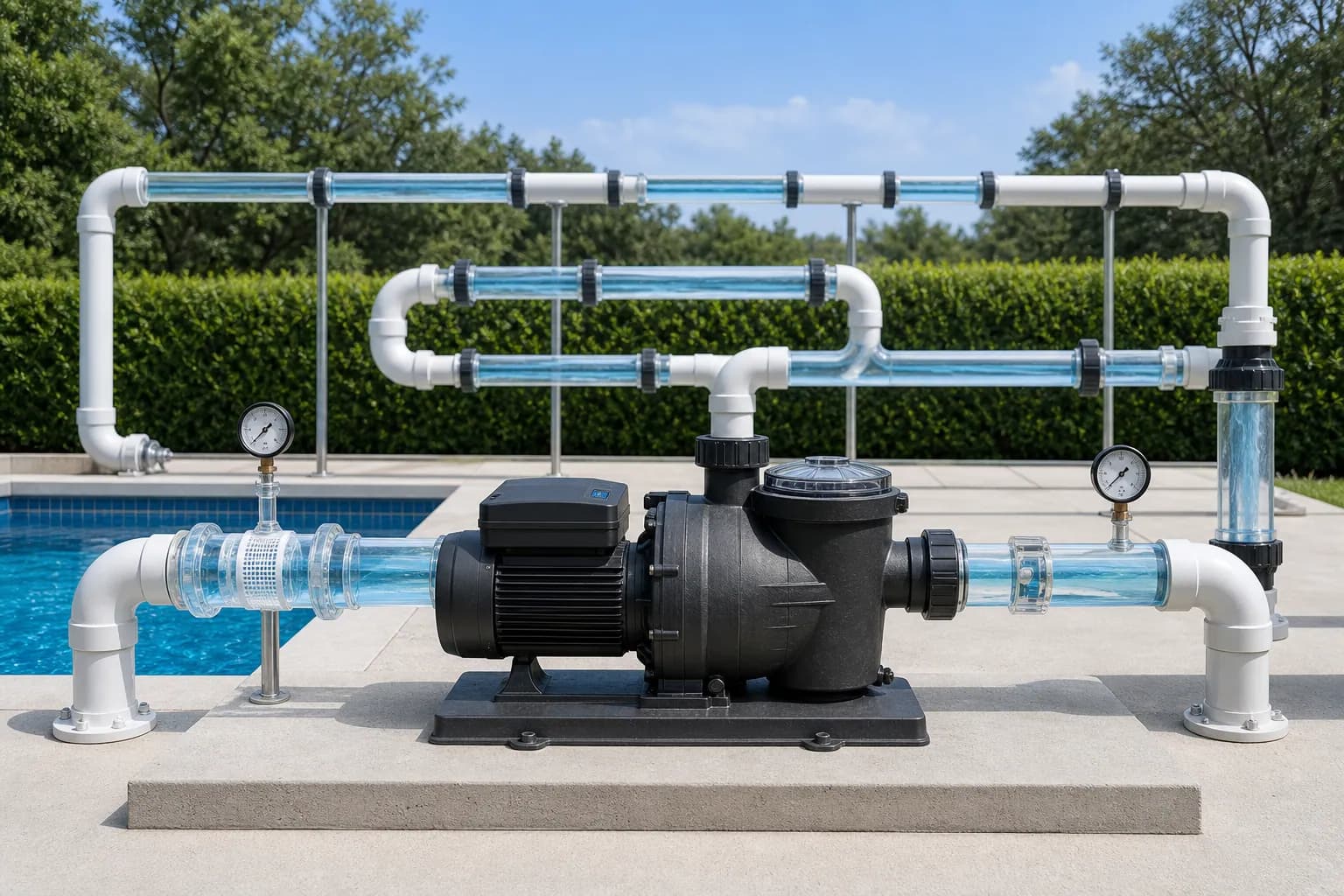
Calculate a starting run time
You need two figures: water volume and actual system flow. For a rectangular pool, multiply length, width and average water depth. The flow printed on a pump box is often a maximum under ideal conditions, without the resistance of pipes, elbows, valves, a filter and other equipment.
A pump labelled 8 m³/h may deliver less once installed. A dirty filter, full basket, narrow pipes and numerous bends reduce flow further. A suitable flow meter is the best way to measure it. Without one, use the pump curve and installation data, or ask a technician to assess the system.
For a 40 m³ pool at an actual flow of 8 m³/h, an equivalent pool volume passes through the filter in about 5 hours. At only 5 m³/h, it takes about 8 hours. Motor size alone cannot tell you how long to run the pump.
This is a starting point, not a guarantee that every part of the water has passed through the filter once. Filtered and unfiltered water continually mix, and poorly circulated corners may remain a problem. After setting the schedule, monitor clarity, chlorine, pH, filter pressure and return flow.
When to run the pump longer
Very hot weather and heavy swimming use usually call for longer circulation. Swimmers add sweat, cosmetics and other organic matter, while wind and storms bring dust and leaves. The filter gets dirty faster and chlorine demand increases.
After a chemical addition, circulation must run long enough to disperse the product. Follow the chemical and equipment instructions for the required time. Extra filtration cannot compensate for incorrect pH or inadequate chlorine; equally, correct dosing is not enough if water barely circulates.
A heat pump or solar heater may also determine the circulation schedule. Automatic chemical dosing must stop when there is no pump flow. Check the minimum flow for the heater, chlorinator and other connected equipment: it can be higher than the flow needed for filtration alone.
Clearing cloudy or green water may temporarily require much longer pump operation, sometimes continuous running for part of the treatment. Return to the normal schedule once the water is clear and the filter clean. If the pump always needs to run 24 hours a day to maintain reasonable clarity, investigate system sizing, filtration and water chemistry rather than accepting the extra electricity cost.
Should you split the pump schedule?
For many home pools, two longer running periods can be practical, for example one during the day and one in the evening. The skimmer then collects debris at different times, and the water is not left without circulation for most of the day. Avoid frequent short starts: not every motor or controller is designed for that pattern.
Schedule some circulation during busy swimming periods and after chemical additions. Off-peak electricity may cost less, but running only at night is not always suitable for a heavily used pool on a hot day. Match the schedule to pool use as well as electricity prices.
A variable-speed pump can often run longer at a lower speed while using less electricity than a conventional pump running briefly at full speed. However, flow must remain sufficient for skimming, filtration, heating and dosing. The lowest speed is not automatically the best setting.
A useful schedule may combine a longer period of low-speed filtration with a shorter higher-flow period for skimming or specific equipment. Change one setting at a time and watch the results over several days. If you shorten the hours, lower the speed and change dosing together, it becomes difficult to identify what caused a water problem.
Check whether the schedule is working
Start with the calculated time and observe the pool for several days. Water should stay clear, chlorine and pH should remain within their required ranges, and surface debris should reach the skimmer. Record the clean-filter pressure so you can recognise when dirt builds up and flow starts to fall.
If the water clouds or surface cleaning is poor, first check water level, skimmer and pump baskets, valve positions and the filter. Look for air under the clear pump lid and weaker return jets. Running a restricted system longer raises electricity use without restoring flow.
If the equipment is working properly, try an extra hour or two and monitor the effect. With a variable-speed pump, you can try longer operation at a lower speed, provided flow remains adequate for every connected device. The aim is clear water and stable readings at reasonable cost, not simply the shortest possible run time.
Unusual noise, overheating, repeated loss of prime or persistent air intake are not timer problems. Shut down as instructed and find the cause or call a technician. Adjust the schedule only once the pump, filter and pipework are working correctly.