Chlorine shock treatment temporarily raises the chlorine level when normal maintenance is insufficient. Common reasons include algae, exceptionally heavy use or measured high combined chlorine. No single dose suits every pool. Before treatment, test the water, identify the reason, read the product label and keep bathers out.
Written and edited by: Pool Explained editorial team
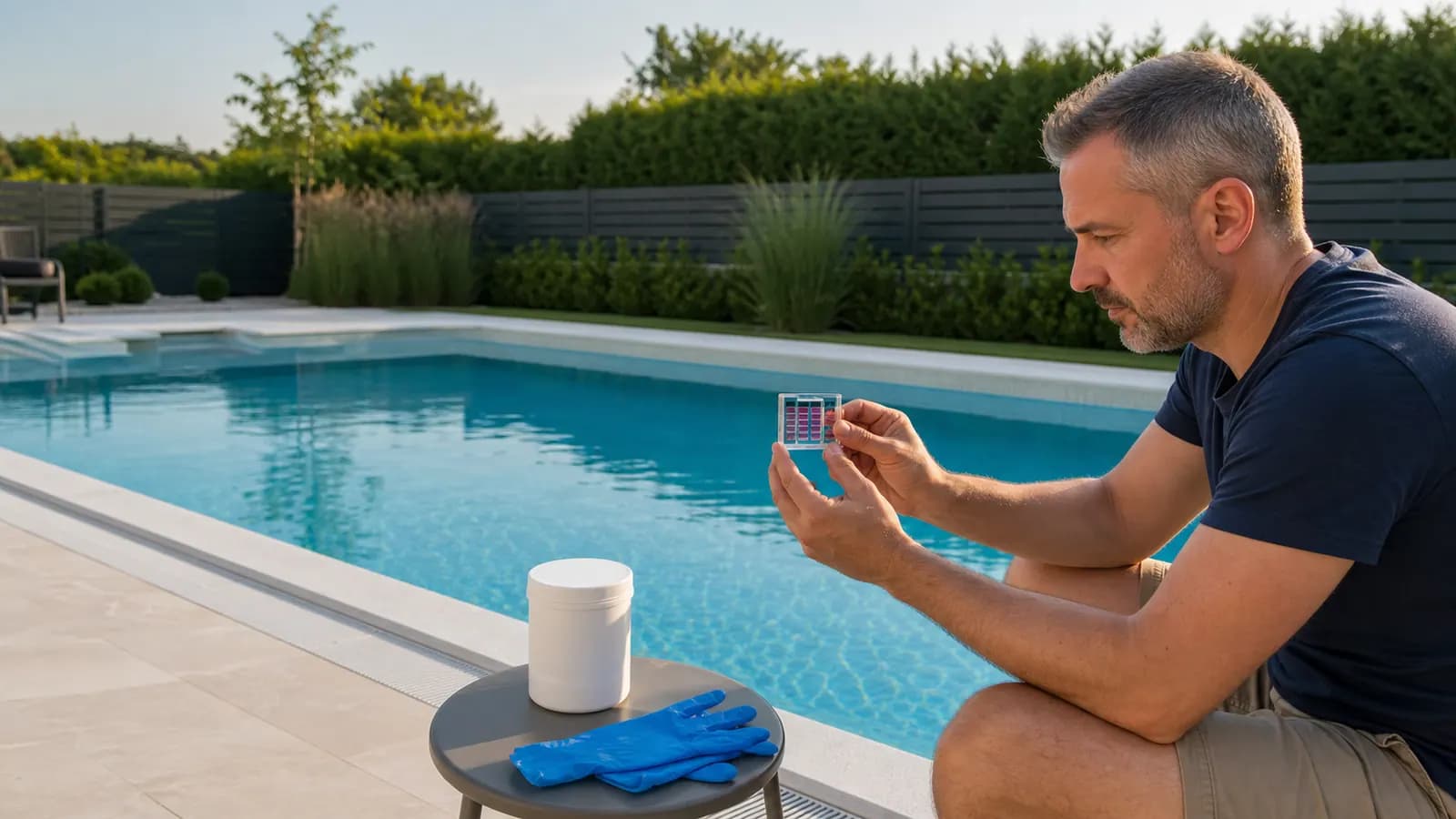
First establish why treatment is needed
Shock treatment is often used to mean any large chlorine addition, but it needs a clear purpose. Green, cloudy water with slippery walls usually points to algae. A strong smell, stinging eyes and a difference between total and free chlorine may indicate chloramines. Storms, heavy use or substantial organic contamination can rapidly consume chlorine. In each case, test before deciding on a dose.
Test free chlorine, total chlorine, pH and, for outdoor pools, stabiliser or cyanuric acid. Subtract free chlorine from total chlorine to find combined chlorine. CDC guidance for public pools includes superchlorination among measures for high combined chlorine, but home pool owners must still follow their specific product labels and understand their test kits' limits. If the kit cannot measure total chlorine, smell alone cannot provide a precise calculation.
Clear water that turns green or brown immediately after chlorine is added may contain iron, copper or other metals. Another large dose can intensify the colour and cause stains. Check whether the floor is visible, surfaces are slippery and the colour appeared after adding well water. If algae are uncertain, test for metals or have a sample analysed first.
Weekly shock treatment is not a requirement for every private pool. If water quality, free chlorine and pH are stable, routinely adding a large dose increases consumption and can unnecessarily expose the lining and equipment to high concentrations. Treat a measured problem, not a calendar date or the assumption that extra chlorine will prevent everything.
Prepare the water and equipment before adding chlorine
Remove leaves and coarse debris, empty skimmer and pump baskets and check normal return flow. With a blocked filter or air entering the pump, chlorine may not distribute evenly and dead algae will not be removed effectively. Record clean-filter pressure so you can recognise when cleaning is needed later.
Check pH before a major chlorine adjustment. High pH reduces chlorine's disinfecting effectiveness; low pH makes water more aggressive towards equipment and surfaces. CDC gives a general pH range of 7.0–7.8. Your pool, finish and chemical instructions may require a narrower range, so follow the documentation for your actual system.
Use a realistic pool volume. An 8 × 4 metre pool averaging 1.4 metres deep holds about 44.8 m³ before accounting for steps and benches. Doses for 45 m³ and 30 m³ differ, and products with different available-chlorine percentages are not interchangeable gram for gram. Use the label, not someone else's scoop or an online dosing photograph.
Prepare goggles, gloves and any other protection specified on the label. Open one container at a time in a well-ventilated area and close it after measuring. Never mix chlorine with acid, pH reducer, another chlorine type or any other treatment. If pre-dissolving is instructed, add the chemical to water, never water to concentrated chemical.
Follow the labelled dose and monitor filtration
Check that the product is intended for your treatment. Shock on a label does not always mean a disinfectant. The EPA distinguishes chlorine treatments from non-chlorine oxidisers that are not, by themselves, disinfectants or algaecides. Look for the active ingredient, available-chlorine percentage, dose per volume, application method and conditions for swimming again.
Add the product only as directed. Some go directly into the water, others require a particular feeder, and some may be pre-dissolved only when instructed. Do not put granules in the skimmer unless explicitly allowed, or leave a tablet on a liner or step. Very high local concentrations can bleach or damage surfaces.
Keep everyone out throughout treatment. Run circulation as required by the product and monitor filter pressure. For algae, brush walls, steps, corners and behind ladders. Water often turns grey or milky as algae die. Treatment is not complete at that point: filtration and vacuuming still need to remove the remains.
Clean the filter according to its pressure rise and manufacturer's instructions. Backwash sand as needed, or remove and wash a cartridge without damaging its pleats. Vacuum settled material to waste if the system permits it and water remains high enough for safe pump operation. Do not add flocculant without checking filter compatibility.
Test again before anyone swims
Waiting time is not determined by a clock alone. One product may require several hours of circulation, another longer, and a substantial treatment can leave chlorine too high the next day. Let the label's waiting period pass, then test free chlorine and pH again. Resume swimming only within the product's and pool's operating ranges.
The pool floor must be clearly visible, without suspended debris or slippery deposits. Clarity does not replace testing, and acceptable readings do not make poor visibility safe. If the floor is obscured, filtration still needs attention. Do not mistake an off-scale chlorine result for zero: very high concentrations can bleach some test reagents.
If the problem returns within a day or two, do not automatically repeat the dose. Check stabiliser, pH, filtration time and performance, poorly circulated areas and organic debris. Repeated large doses without finding the cause can damage equipment, increase costs and delay a proper solution, especially with an undersized or neglected filter.
Keep four records: the pre-treatment readings, product and amount used, dosing time and results before swimming resumes. This shows how your particular pool responds and avoids reliance on memory next time. Seek water analysis or professional help if readings are implausible, colour changes, or irritation and strong smells persist despite adjustment.