pH
pH affects swimmer comfort and sanitizer effectiveness. If it is outside the required range, correct it before further treatment.
Water care
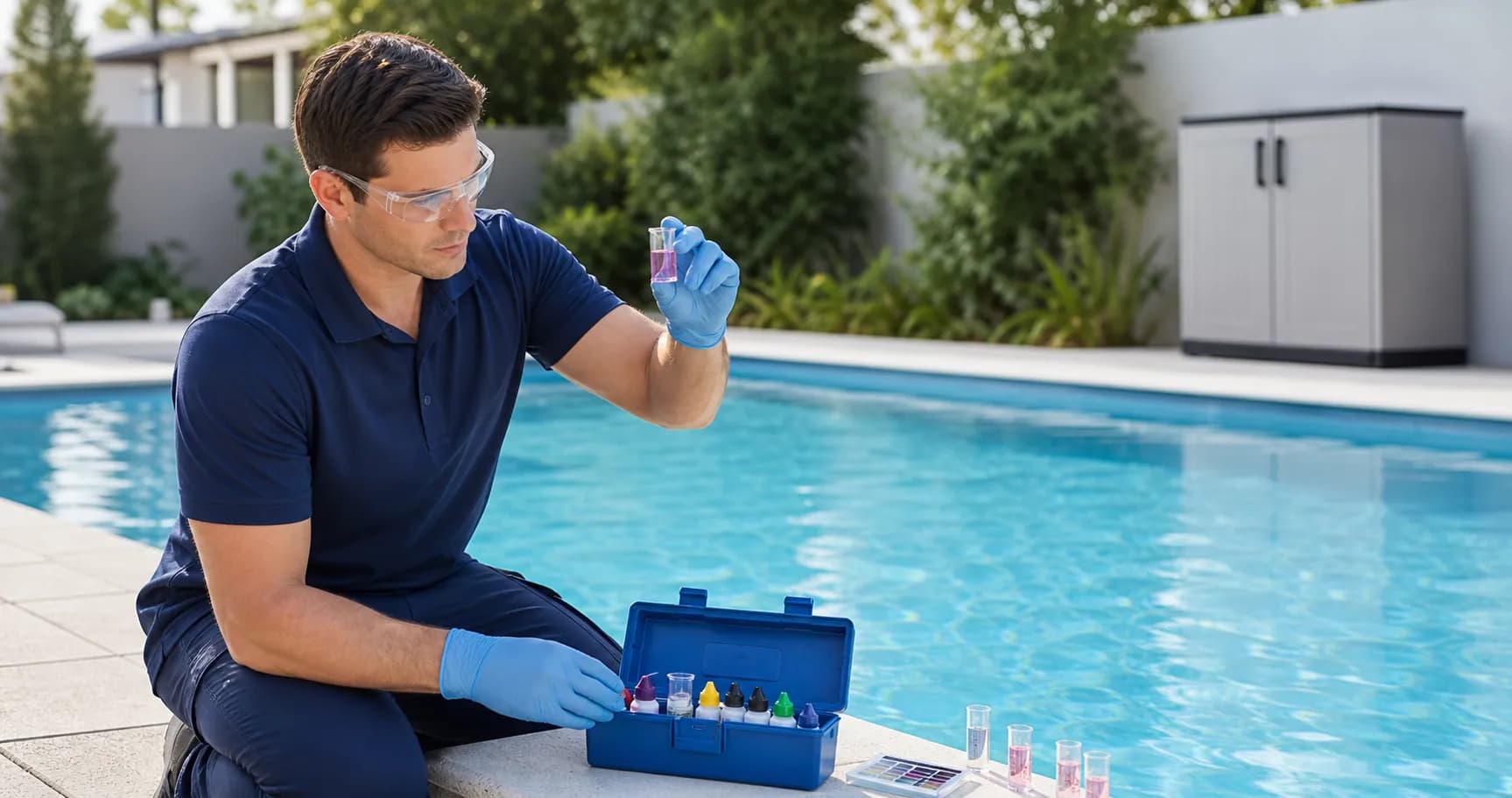
Test the water before adding anything. Adjust pH, check the sanitizer level and make sure filtration is working properly. Use chemicals to correct a measured problem, not just a change in how the water looks.
The basics
Understanding your readings makes it easier to choose the right treatment. A change in water colour is a reason to investigate, not enough information to choose a dose.
pH affects swimmer comfort and sanitizer effectiveness. If it is outside the required range, correct it before further treatment.
Free chlorine is the chlorine available to disinfect the water. Test it before dosing so you know whether an adjustment is needed.
Alkalinity helps keep pH stable. If pH keeps changing, check alkalinity before repeatedly adding pH adjuster.
Chemicals cannot make up for poor flow, a dirty filter or too little pump runtime. Water needs to pass through the filter for particles to be removed.
What to do next
Make each adjustment in the right order and allow the required time before retesting. Adding more products too soon can waste chemicals without solving the problem.
Use suitable test strips, drop reagents or a digital tester. Testing tells you which treatment, if any, is needed.
Correct pH before carrying out a major chlorine, algae or cloudy-water treatment, following the product instructions.
Once you know the pH and free chlorine level, you can decide whether the pool needs an adjustment, a shock treatment or routine maintenance.
Circulate the water after treatment as instructed. Clean or backwash the filter when needed.
Pool chemicals
Product names vary, but their main uses are balancing the water, disinfection, algae control and removing fine particles.
These products lower or raise pH. Follow the label, make controlled adjustments and test again between doses.
The primary sanitizer in many home pools. The formulation and strength vary by product.
A supplemental treatment to help control algae. It does not replace testing, chlorine or filtration.
Clumps fine particles together so they can be removed by filtration or vacuuming, where the product is compatible with the system.
Common mistakes
Handle pool chemicals carefully and follow the product label. Never combine products unless the manufacturer's instructions explicitly allow it.
Next steps
See the formula, worked examples and safe dosing instructions.
Learn moreEstimate a chlorine adjustment using the pool volume and the product's stated strength.
Learn moreIf the water has turned green, check for algae and test pH and chlorine. Inspect the filtration too.
Learn moreIf the water is cloudy rather than green, check pH, filtration and suspended particles.
Learn moreWhen shock treatment is appropriate, how to apply it and what to check before swimming again.
Learn moreStart the system and balance newly added water without mixing treatments or adding them all at once.
Learn moreCompare active ingredients, stabilizer content, dosing methods and storage requirements.
Learn moreCheck alkalinity, adjust in stages and test again before adding more.
Learn moreWait for the label's stated time, then check free chlorine, pH and water clarity.
Learn morePractical answers
Start with pH and free chlorine. Check alkalinity as well, especially if pH is difficult to keep stable.
It may help, but algaecide alone is not a complete treatment. Check pH, sanitizer, filtration and the amount of organic debris in the pool.
The same symptom can have several causes. Without a test, it is easy to choose the wrong product or add too much.
No. Filtration removes particles, but you still need to disinfect the water and maintain its chemical balance.