Swimming pond
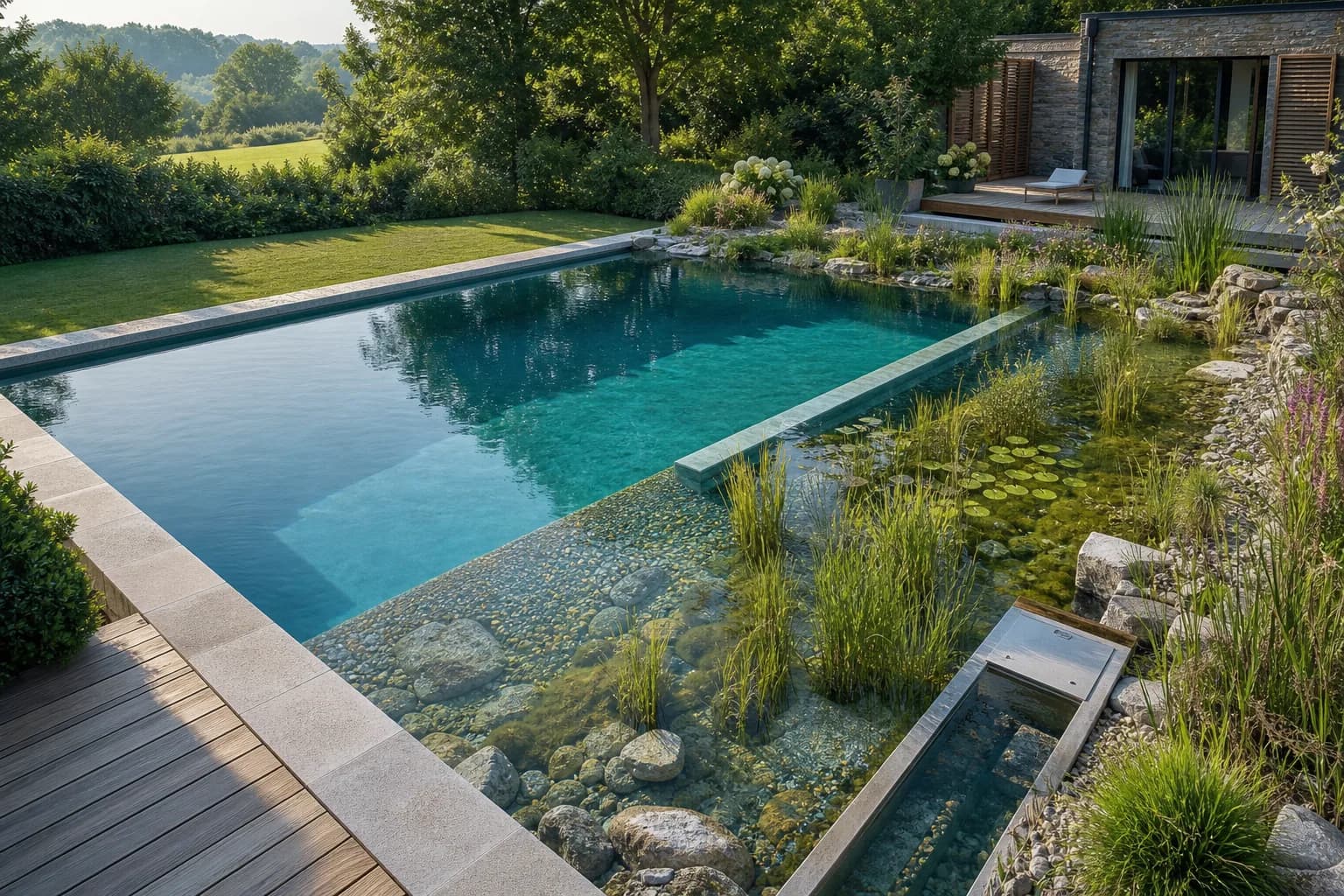
The swimming area and a visible planted regeneration zone form part of the same landscape. Seasonal changes, occasional insects and a thin biofilm are normal in a living system. Persistent cloudy or unpleasant-smelling water is not.
Biological water treatment
Natural pools use mechanical and biological treatment instead of conventional continuous chlorination. Clear water depends on correctly sized swimming and treatment zones, adequate flow, suitable filtration and regular maintenance.
A skimmer or overflow channel collects floating debris.
A screen and pre-filter remove larger particles.
Biofilm and a purpose-designed filter treat the water.
Return flow is arranged to avoid stagnant areas.
Simplified diagram. Actual flow rates, filters and zone sizes must be calculated for the individual system.
The basic distinction
A natural pool is defined by its treatment system, not its shell. It contains a deliberately designed aquatic ecosystem that uses biological and mechanical processes to maintain water quality. Suppliers use different names, so the quote must explain the actual technology.
The swimming area and a visible planted regeneration zone form part of the same landscape. Seasonal changes, occasional insects and a thin biofilm are normal in a living system. Persistent cloudy or unpleasant-smelling water is not.
A geometric swimming area is connected by pipework to a separate planted or filtration zone. This creates a more formal appearance, but the biological system still needs appropriate care.
These can look much like conventional pools. Biological treatment takes place in a concealed mineral filter or another purpose-designed filter, often with few or no visible plants.
Higher bather numbers require dedicated design calculations, monitoring and compliance with local public-health rules. A system designed for a private garden cannot simply be used for a public swimming facility.
Before drawing up plans
Runoff, soil, leaves and the composition of the fill water can continually add to the treatment load. Assess the surroundings before selecting the system and sizing the filtration.
Excessive warmth can accelerate biological activity and algae growth, while too little sunlight limits the choice of plants. The designer needs to account for water depth, shade, circulation and the local climate.
Leaves, fertiliser, soil and runoff from lawns introduce organic matter and nutrients. Pool edges, skimmers and ground slopes should keep this material out of the water.
Well water, mains water and rainwater have different mineral and microbiological characteristics. Testing before design helps establish phosphorus levels, hardness and a suitable top-up strategy.
A planted zone may increase the total footprint. A concealed filter still needs room for servicing. Plan access to equipment, a place to collect removed plant material and safe access for routine maintenance.
Structure, circulation and treatment
The watertight structure holds the water, pipes and pumps circulate it through the filter, and biological treatment removes excess nutrients. A serious design fault in any one of these cannot be permanently compensated for by the other two.
Nutrient control is particularly important. Designers often assess phosphorus before construction because it can enter with fill water, soil, dust, plant debris and swimmers. No single plant solves this: nutrient input, removal and filter capacity all need to be considered.
Natural does not mean pump-free, maintenance-free or test-free. A simple landscaped pond and a compact high-tech bio-pool can require very different equipment, electricity use and routines.
Project stages
This is a planning checklist, not a DIY construction guide. A qualified designer must specify dimensions, circulation and water treatment for the actual site and use.
Pool care
Natural pools need different care from chlorinated pools. You still need to remove debris regularly, maintain the specified flow, care for plants and monitor water quality.
Remove floating debris, check the skimmer and pre-filter, inspect flow and water level, brush accessible surfaces and record any sudden change in clarity or smell.
Clean the filter as specified, remove sludge from designated collection points, check pumps and aeration, and test the water parameters specified by the designer.
Dead plant material releases nutrients back into the water. Prune, thin and remove vegetation according to the plant species and season. Do not add fertiliser without the designer’s approval.
Start-up, pruning, frost protection and circulation settings depend on the climate and system. Do not routinely drain the pool or add treatment products without the designer’s approval.
Problems and solutions
Do not add conventional pool treatments at random. Start by checking circulation, incoming debris and the biological treatment zone.
Check circulation, mechanical filtration, nutrient input, bather numbers and filter condition. Adding an algaecide at random can damage the biological system and hide the underlying problem.
Small amounts are not unusual in a living system. If growth suddenly increases, remove the algae by hand and check sunlight, phosphorus, dead vegetation, circulation and the filtration zone.
A full skimmer, blocked pre-filter, air in the pipework, closed valve or pump fault can reduce flow. Running below the design flow rate reduces treatment performance.
If organic material accumulates or areas become short of oxygen, check circulation, remove sediment and find where the contamination is coming from. An unpleasant smell is not normal in a well-maintained natural pool.
The species may be unsuitable for the depth, light or water chemistry. Excessive growth can indicate too many nutrients. Choose plants as part of the treatment design, not as a final decorative addition.
If muddy runoff enters the pool, first correct the site drainage, levels and pool edges. Then remove the deposited sediment and check the treatment system.
The quote should include the shell, waterproofing, treatment zones, filters, earthworks, plants and landscaping. A price that excludes finishing work cannot be compared directly with a complete project price.
Allow for pumps, skimmers, robotic cleaning or vacuuming, pruning and professional inspections. Ask for equipment power ratings and operating schedules, not promises that the system costs nothing to run.
Budget for pump servicing, consumable parts, filter media replacement where specified, replacement plants, sludge removal and possible repairs to the edges or waterproofing.
Reviewing the quote
Ask for written, measurable answers specific to your site. Manufacturer claims are useful only when they identify the system and conditions they apply to.
FAQ
The principle is to treat water mechanically and biologically rather than maintain a conventional residual disinfectant. Water chemistry still needs testing, materials must be compatible, and any corrective treatment must suit the particular system.
Swimming ponds usually have a visible planted regeneration zone. Some modern bio-pools use a concealed biological filter with very little visible vegetation. Names vary between suppliers, so ask how the water is treated rather than relying on a product name.
Mosquitoes mainly breed in still, stagnant water. Proper circulation, surface maintenance and a functioning ecosystem reduce suitable breeding spots. Check other standing water around the garden too.
The water can be very clear, but a natural pool is not a sterile environment. Seasonal changes are possible. Persistent cloudiness, unpleasant smells or heavy algae growth need investigation.
Not necessarily. Disinfectant use may differ, but pumps, filters, cleaning, plant care, testing and occasional specialist servicing still cost money. Compare lifetime costs, not just chemical consumption.
Sometimes, but the shell, pipework, available space and options for a separate filtration zone all need assessment. Adding a few plants to a conventional pool does not turn it into a properly designed natural system.
Any open water requires supervision and multiple layers of protection. Natural edges, varying depths and planted zones can make it harder to see swimmers. Plan safe entry points, slip-resistant surfaces, barriers and rules from the outset.
It depends on the treatment system. A swimming pond with a large regeneration zone needs more space; a compact biofilter can reduce the visible treatment area. The designer should calculate the proportions for the specific system.
Related guides
Sun, wind, drainage and the surrounding garden affect the biological treatment.
Learn moreOne possible construction method for the swimming area.
Learn moreHow flow, pipework resistance and service access affect equipment selection.
Learn moreCompare complete quotes and long-term costs.
Learn more