Wet-mix shotcrete
Concrete is mixed before pumping through a hose and spraying onto the reinforcement. It suits curved and complex shapes but requires specialist equipment and a team experienced in pool shells.
Custom-built pools
Concrete gives you more freedom over pool shape, depth and finish, but proper design and careful inspections are essential. Make the important decisions before excavation and concreting, while mistakes can still be corrected without demolition.
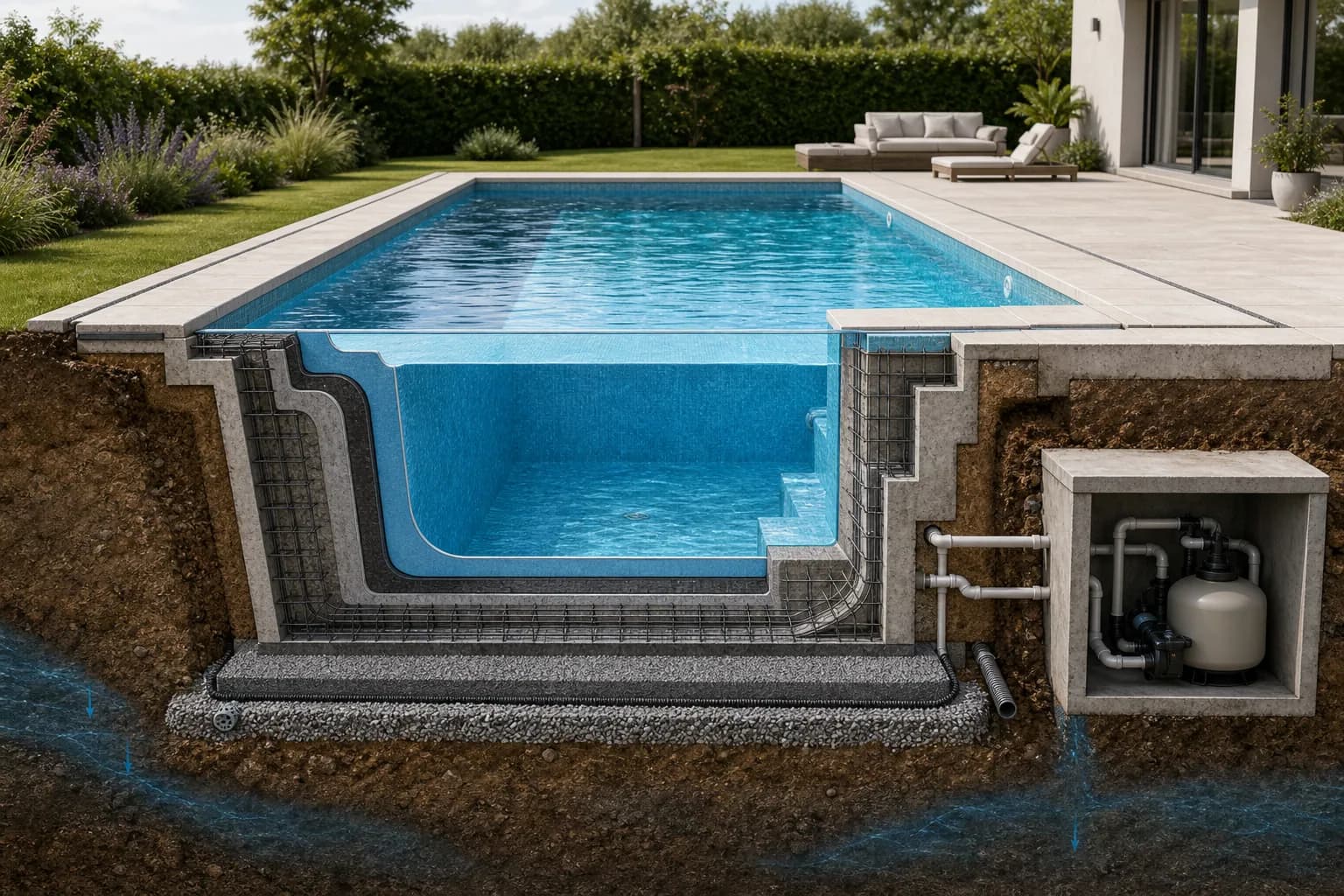
At a glance
Concrete makes most sense when you want dimensions, depth or features that a prefabricated shell cannot provide and can allow a longer build involving several trades. If a short installation and a fixed model matter more, compare fibreglass or panel pools.
Before requesting quotes
Decide on the location and approximate size, check machinery access and gather information about soil and groundwater. Then request quotes covering the same work. The shell price alone is not the cost of a finished pool with all safety measures in place.
Construction methods
Any of these methods can produce a reliable shell when design and preparation are sound and an experienced crew places and checks the concrete correctly.
Wet-mix shotcrete
Concrete is mixed before pumping through a hose and spraying onto the reinforcement. It suits curved and complex shapes but requires specialist equipment and a team experienced in pool shells.
Dry-mix shotcrete (gunite)
The dry mix reaches the nozzle, where water is added. An experienced crew can work accurately on demanding surfaces; poor technique causes dust, excessive rebound and inconsistent concrete.
Cast-in-place reinforced concrete
Concrete is poured into formwork and properly consolidated. The forms must be stable, joints designed in advance, and concrete placed thoroughly around reinforcement and penetrations.
ICF insulating forms
Insulating blocks provide permanent formwork, while the reinforced concrete core carries structural loads. This system also needs structural design and carefully detailed joints and penetrations.
Learn moreBefore construction
Pool shape, structure, services and surrounds all affect one another. If each is planned separately, clashes often emerge only when work starts on site.
Ground conditions and groundwater
Fill, loose soil, a slope or high groundwater can substantially change foundation preparation and structural requirements. Where these conditions exist, a geotechnical assessment should inform the design.
Shape, depth and use
Decide whether the pool is mainly for swimming, play, relaxation or a combination. Depth, steps and shallow areas affect safety, water volume, heating and maintenance.
Circulation and equipment
Plan skimmers or overflow channels, returns, drains, lighting and equipment space alongside the pool shape. Drilling through the shell later costs more and creates another potential leak point.
Pool surrounds
Include paving, rainwater drainage, a fence or cover and equipment access in the design. Equipment must remain serviceable, and runoff must not drain into the pool.
Excavation near a house, retaining wall or property boundary needs specific planning. Do not leave excavated soil or machinery at the edge without assessment, and arrange controlled removal of incoming water. Local rules and the engineered design take priority over general advice.
Before concreting
Corrections become harder and more expensive after concreting. Make reinforcement, pipe and fitting inspections an agreed construction stage, not an informal glance during the work.
After concreting
Concrete may quickly look dry and firm while it is still developing strength. Rapid moisture loss or unsuitable temperatures in the early days increase the risk of surface cracking and a weak base for finishes.
Specify the curing regime for the construction method and weather conditions. The American Shotcrete Association recommends at least seven days of continuous moist curing for shotcrete, with additional requirements where a cement-based finish is to follow.
Pool finishes
The finish determines appearance and feel underfoot, but cannot repair a defective structure. Inspect the shell and confirm that the substrate, waterproofing and subsequent layers are compatible before installation.
Pool plaster
A mineral finish provides a continuous surface and a traditional appearance. Durability depends on substrate preparation, application, start-up and subsequent water care.
Tiles or mosaic
An option for a durable finish with a wide choice of appearance. Waterproofing, adhesive, grout and penetration details must be compatible.
PVC membrane or pool coating
A membrane or specified pool coating can provide the final watertight layer. Prepare a smooth base to the requirements of the complete system.
Pay particular attention to construction and movement joints, corners, skimmers, drains, returns, lights and coping. Ask for technical documentation for the complete system, not just the finishing product's name.
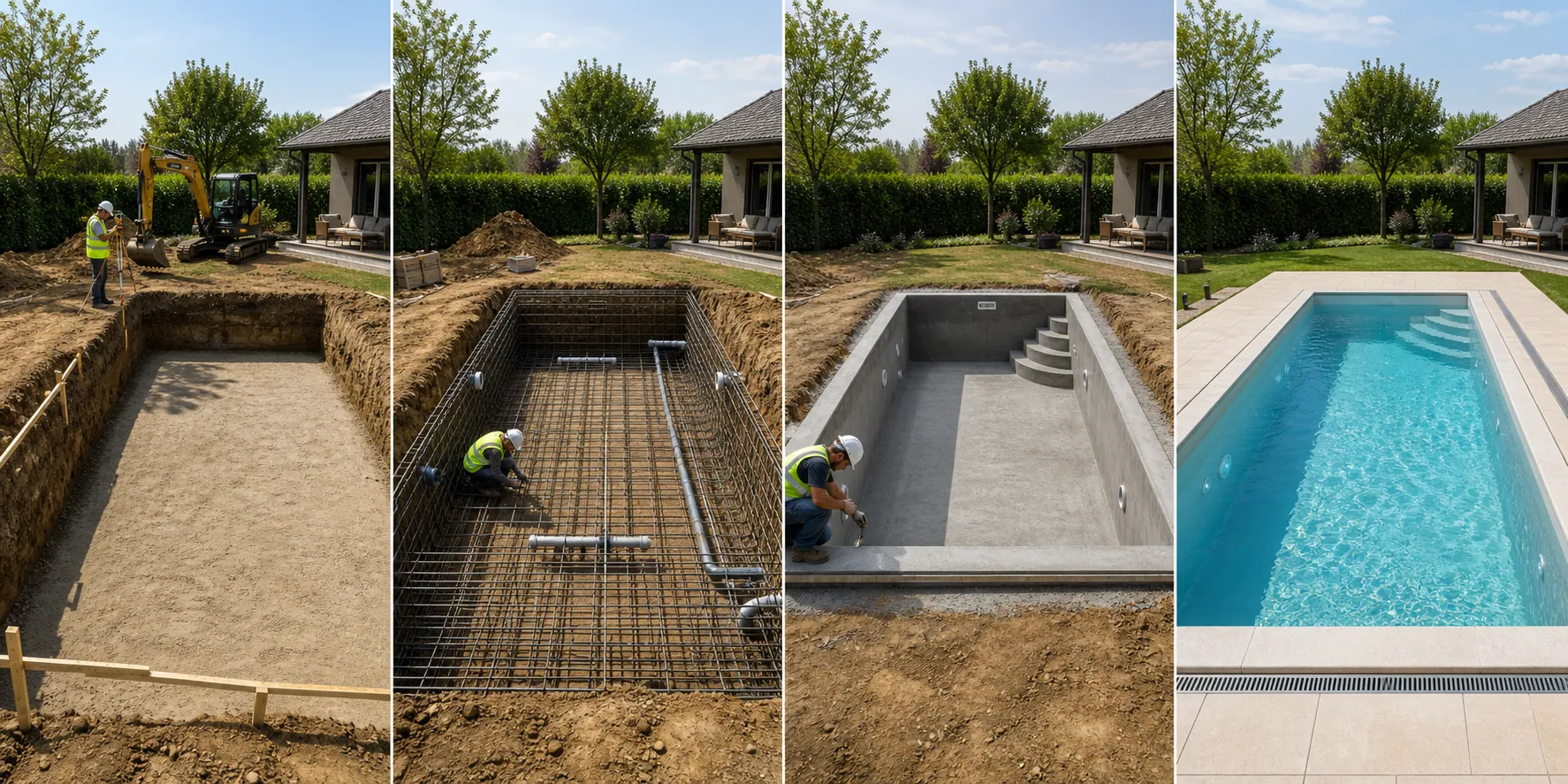
Construction sequence
The order can vary slightly between projects, but do not skip inspections to shorten the schedule.
Costs
Size, shape, site conditions, construction method, finish, equipment and surrounds all affect price. Quotes are comparable only when they cover the same work and quality requirements.
Design and preparation
Surveying, design, geotechnical assessment where needed, approvals, access preparation and protection of the existing garden.
Excavation and structure
Excavation and soil removal, drainage or excavation support where needed, base preparation, reinforcement, concrete, formwork and quality tests.
Finish and pool equipment
Waterproofing, lining, pipes, pump, filter, disinfection, lighting, heating and commissioning often account for a large share of the final cost.
Surrounds and additional work
Budget for paving, drainage, fencing or a cover, and garden restoration. Include a contingency for justified work that could not be anticipated before excavation.
Approve additional work before it starts
Keep a contingency for justified work that could not be anticipated before excavation. The contractor should explain the work, price and schedule impact for your approval in advance. Items known from the outset belong in the original quote.
Construction mistakes
Many serious problems develop in parts that will later be hidden. Agree inspections before the next layer covers the work.
After construction
The structure generally lasts longer than equipment and finishes. Regular inspections help distinguish ordinary wear from leaks or movement needing professional assessment.
Routine maintenance
Monitor water chemistry, flow, water level, filter pressure and penetrations. Correct water care helps protect the finish, metal components and seals.
Periodic inspection
Inspect grout, movement joints, coping, paving drains and the equipment area. Photograph small changes so you can tell later whether they are getting worse.
Refurbishment and repairs
A worn finish can be replaced, but investigate cracks or leaks first. Resurfacing does not fix structural movement or a damaged penetration.
Related guides
ICF pool construction
A closer look at insulating forms and the reinforced concrete core.
Learn moreSite preparation
Check access, foundations, drainage and excavation conditions.
Learn morePool installations
Plan pipes, equipment space, electrics and drainage before building the shell.
Learn moreCosts and budget
Budget for the whole project, from site preparation to the finished pool surrounds.
Learn moreFibreglass pools
Compare custom construction with a factory-made shell.
Learn moreLiner pools
See how PVC membranes differ in installation and later refurbishment.
Learn moreFAQ
A well-designed and properly built reinforced concrete shell can last for decades. Finishes, seals and equipment need renewal sooner, with lifespans depending on the system and maintenance.
It depends on design, approvals, site access, ground conditions, weather, construction method and finish. Ask for a staged programme that includes concrete curing and inspections before subsequent work.
Gunite commonly refers to the dry-mix process, while shotcrete can include wet-mix application. The specified mix, working method and crew's experience matter more than the name in the quote.
Tiles are a finish, not a substitute for a correctly built shell and waterproofing system. Check joints, penetrations and compatibility between layers especially carefully.
Do not drain it without assessing groundwater, drainage and finish requirements. Without the weight of pool water, external groundwater pressure can damage or lift the shell.
No finish is best for every pool. Choose for the substrate, appearance, budget, maintenance and availability of an installer experienced with the complete system.
The scope, materials, shell construction method, concrete curing, pipe tests, waterproofing, finish, equipment, documentation, warranties and procedure for approving extra work.
Have the structure designed by a suitably qualified professional. Slopes, fill, high groundwater, proximity to a house and unusual pool shapes need particular attention.