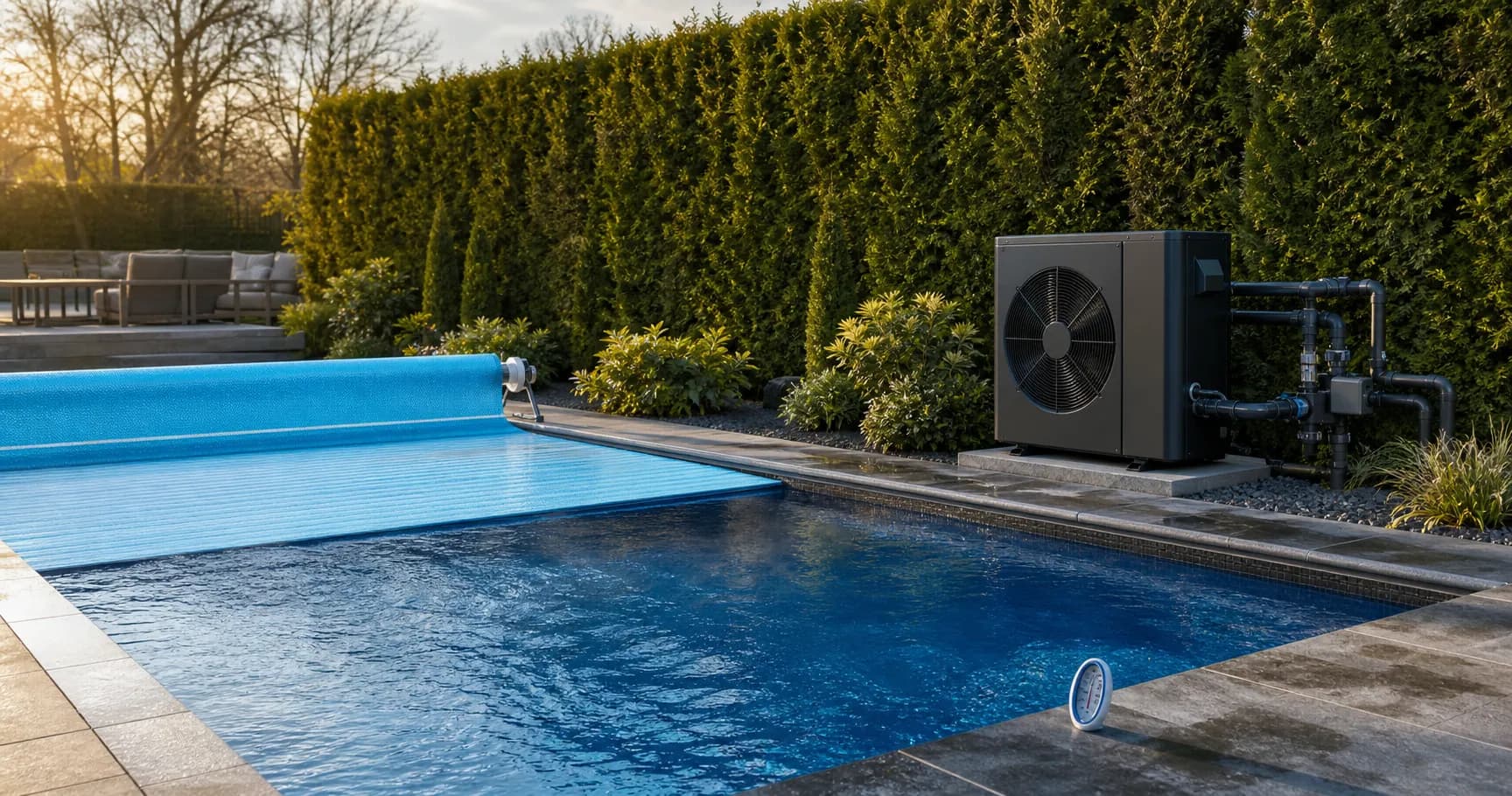
After choosing a heating method, establish the required output and operating conditions. Volume helps estimate the energy needed to warm the water, while surface area, wind, overnight temperature and cover use affect losses. Two pools of the same volume may therefore need different heaters and have different seasonal costs.
Written and edited by: Pool Explained editorial team
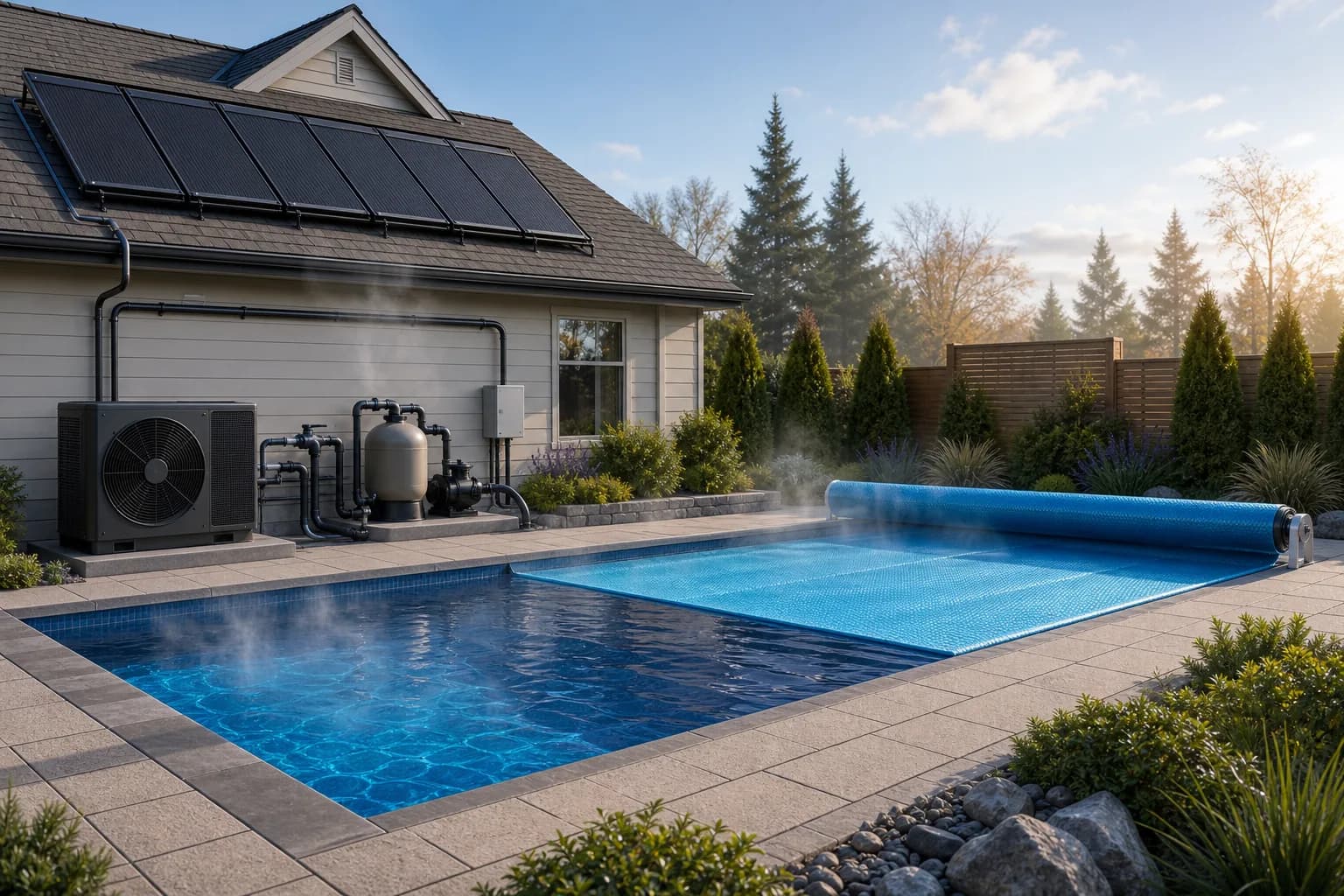
Which heating method suits your needs?
Making summer water more comfortable is different from planning spring and autumn swimming. Occasional top-up heating may need a different system from maintaining a constant temperature. Note your intended season, usual water temperature and how quickly you expect recovery after cold weather.
Volume determines how much energy is needed to heat all the water. Surface area, wind, air temperature and humidity affect subsequent losses. A recommendation based only on cubic metres is a starting estimate, not a reliable final selection.
Each extra degree requires more energy and running time. A family pool need not be kept at hot-tub temperature to be comfortable. Before buying a larger heater, choose a reasonable target, use a cover consistently and adjust the schedule to conditions.
Heat pumps, solar collectors and heat exchangers work differently
A heat pump transfers heat from outside air to the water. It can maintain a set temperature within its operating range, but output and efficiency fall in colder air. It needs adequate water flow, a suitable electrical supply, unrestricted airflow and condensate drainage.
Solar collectors use sunlight with low operating energy use, but their heat contribution depends on exposed area and weather. Water should pass through them only when they are warmer than the pool; otherwise they can cool it at night or in cloudy conditions. Good results require enough unshaded collector area.
A heat exchanger can connect the pool to a boiler or another existing heat source. It may provide rapid heating, but check the source's capacity and safe separation of the circuits. Direct electric heaters are compact and simple, but often expensive to run for larger pools.
Include a cover with any heating system
Evaporation is often the main source of heat loss from an outdoor pool. Covering reduces overnight cooling and top-up needs. A bubble-style solar blanket is a simple daily option; automatic and safety covers offer different features at a substantially higher cost.
To reduce losses, use the cover regularly. A heavy or awkward one left beside the pool for most of the season saves nothing. For larger pools, plan a reel or another easy handling method. Assess child safety separately: a solar blanket does not protect against falling into the water.
Wind shelter can also reduce cooling, but do not enclose equipment that needs airflow. Trees, fences and buildings can shade solar collectors or affect heat-pump placement. Plan heating and covers alongside the overall site layout.
How much heating capacity do you need?
Compare output under similar conditions, not only maximum capacity or the best efficiency figure in a catalogue. Raising 30 m³ of water by 1°C needs about 35 kWh of heat before losses. For a heat pump, check the air and water temperatures at which output and efficiency were measured.
If the unit supplies 10 kW of heat to the water under those conditions, 35 kWh means at least three and a half hours for a 1°C rise. Actual heating takes longer because the pool loses heat at the same time. This example helps you question unrealistic promises and compare quotations under the same outdoor conditions.
Install the heater in properly designed pipework with valves and, where required, a bypass. Keep water chemistry within the manufacturer's limits to protect the heat exchanger. Qualified professionals must make electrical and gas connections. Leave the specified clearances and access for servicing.
Solar collectors and a cover may be sufficient for one household, while another values the predictability of a heat pump. Ask for estimated heating time, seasonal energy use and the outdoor conditions in which the system can maintain your temperature. Compare these with when you actually intend to swim.
How quickly will the water warm up, and why does it cool overnight?
Before initial heating, record water and air temperatures, the start time, cover position and pump setting. Measure again after several hours and the following morning. One cold or windy day is not conclusive, but several records show how quickly the system heats and how much warmth is lost overnight.
For a heat pump, check unobstructed air intake and discharge, normal condensate drainage and sufficient water flow. If ice builds on the exchanger, operation seems unusual or it repeatedly cycles on and off, consult the manual and a technician. For solar heating, check that controls route water through collectors only when they are warm enough.
If the pool does not reach its target temperature, compare actual conditions with the quotation's assumptions first. Check the cover, overnight losses, run time, flow and outside temperatures before judging heater capacity. This distinguishes excessive loss from an uncovered pool from an undersized heating system.
When comparing bills, record cover use and bather numbers too. Consumption in a warm, calm week does not represent a cold start to the season. Note outside temperatures, which strongly affect heat-pump output. Records from different conditions give a realistic cost picture and let you adjust temperature and schedules without guesswork or an unexpected bill.