Location and site conditions
Consider sunlight, wind, trees, boundaries, buried services and machinery access when choosing the location.
Planning the work
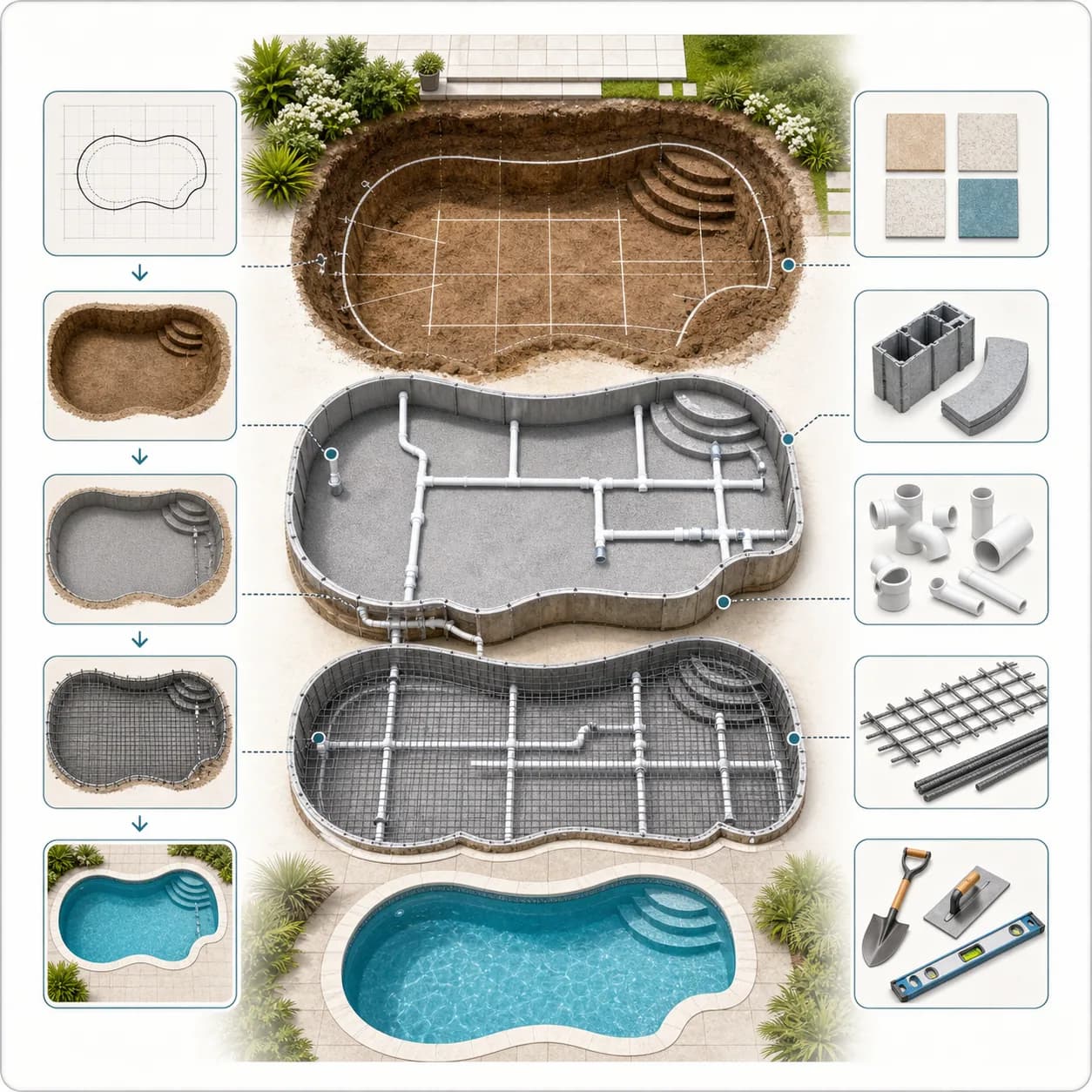
Coordinate the position, levels, base, drainage and services before excavation. Check each stage before backfilling or adding the next layer, while the work is still visible.
Main guides
Start with site preparation and services, then inspect construction stage by stage. Below-ground installation of an above-ground pool has its own guide because not every model is suitable.
Check the location, access, soil, levels and drainage before excavation and base preparation begin.
Learn more Step 2Plan pipes, valves, electrics, drainage and equipment space while routes are easy to change.
Learn more InspectionInspect work from the contract stage to handover, especially before foundations and pipework are covered.
Learn more Specialist designCheck when below-ground installation is permitted and how an independent retaining wall can keep soil and decking loads off the pool.
Learn moreProject planning
Poor drainage can undermine the base and structure. Choosing equipment too late can mean longer pipe runs and difficult maintenance access.
Consider sunlight, wind, trees, boundaries, buried services and machinery access when choosing the location.
Pool type determines excavation, base preparation, reinforcement, backfilling and protection from groundwater.
Plan skimmers, returns, pipes, cables, drainage and equipment before the structure and paving hide them.
Paving must drain rainwater away, provide safe access and leave enough room for routine servicing.
Inspecting the work
Check pipes, cables, drainage and the base while you can see them. Mistakes can then be corrected without digging up finished paving.
Pool structure
General guidance helps you plan, but the design and manufacturer's instructions determine the base, structure and assembly details.
Find out when a pool must not be buried and how separate retaining walls and decking can create a similar appearance.
Learn moreCoordinate the structure, penetrations, waterproofing and finish from the start.
Learn moreCheck delivery access for the shell and plans for excavation, bedding, backfill and groundwater drainage.
Learn moreLevel walls and floors, correct profiles and penetrations, and a clean prepared base are essential for a neat, durable liner installation.
Learn moreRelated topics
Reconsider pool types if site conditions, access or construction requirements make your original choice impractical.
Learn moreBudget for site preparation, installations, finishes, equipment and unexpected work.
Learn moreChoose the pump, filter and accessories to suit pipe routes, available space and required flow.
Learn moreThe final location, dimensions and levels, ground conditions, drainage, construction access, structure, service routes, equipment space and pool surrounds.
An exposed pipe or joint is easier to repair. Once it is buried or enclosed, finding and fixing a problem becomes more difficult.
Agree this before work starts. One person should be responsible for coordinating the design, work sequence, inspections and document handover.
Yes. Photos with measurements show pipe and cable routes, help future servicing and reduce the need for exploratory digging or drilling.