Choose a cover for the job you need it to do
A cover used daily can reduce evaporation, retain some heat and keep leaves out. Winter and safety covers have different purposes. First decide what you need, then compare materials, handling and price.
Written and edited by: Pool Explained editorial team
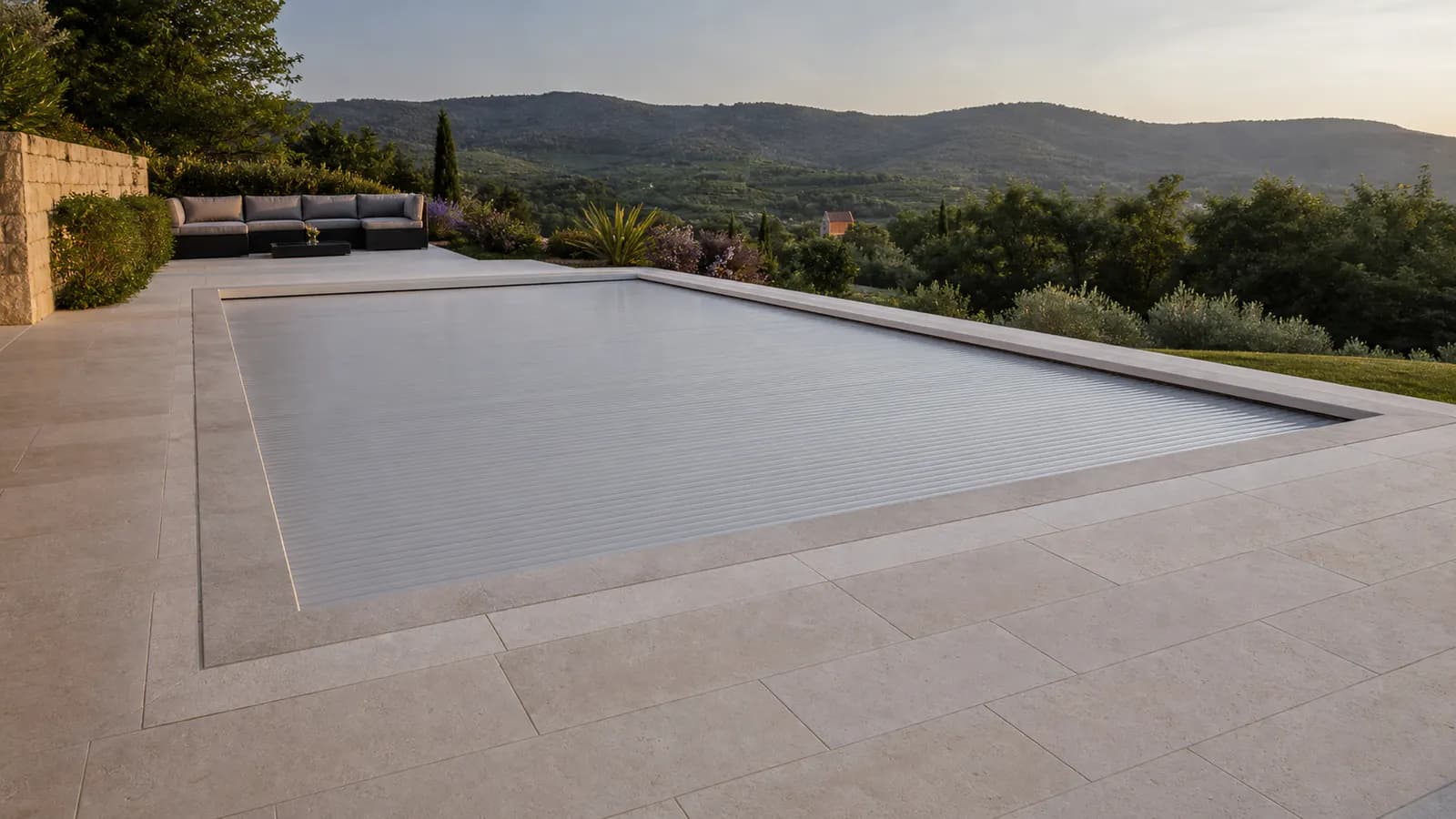
For daily use, choose a cover you can handle easily
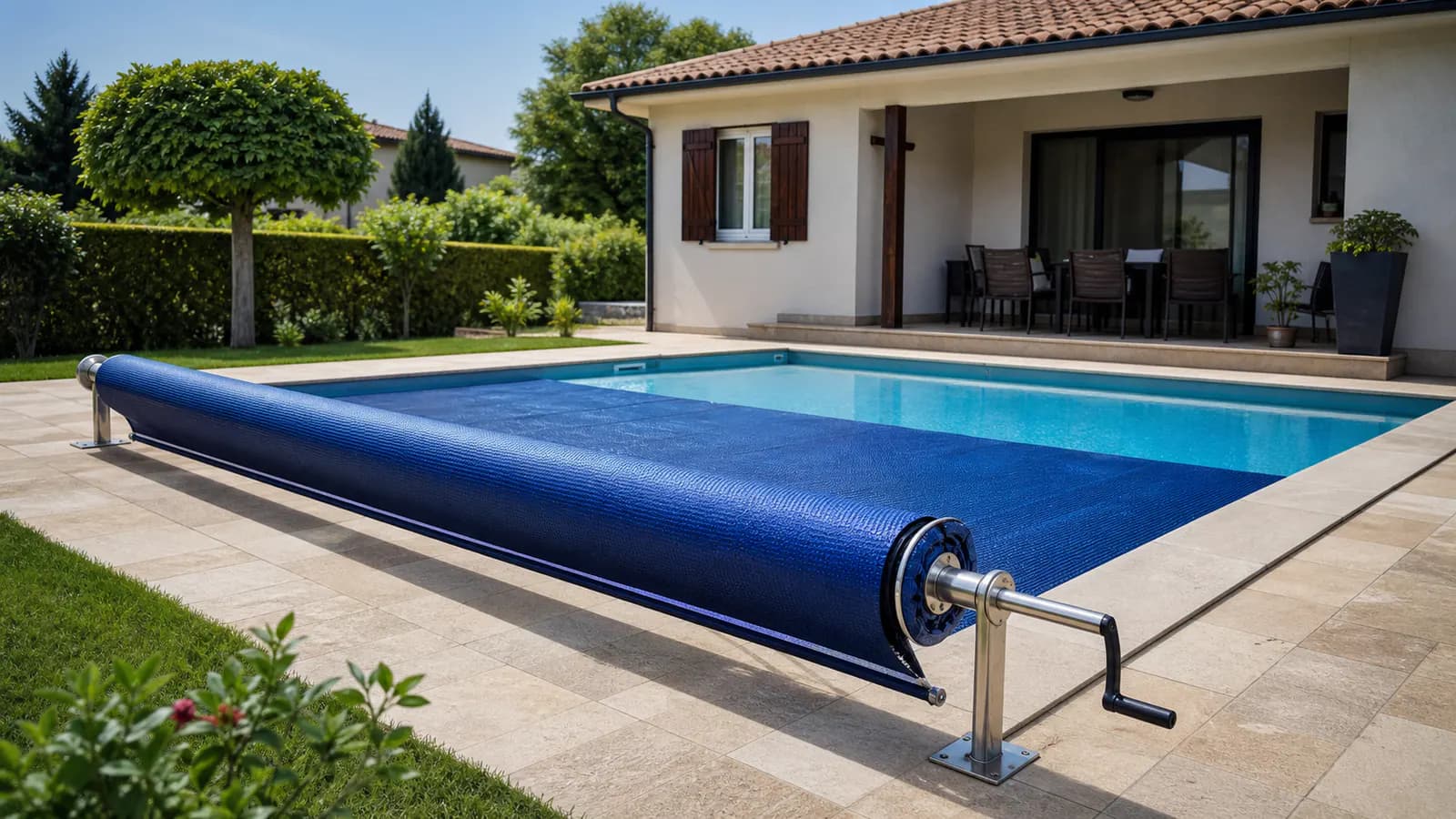
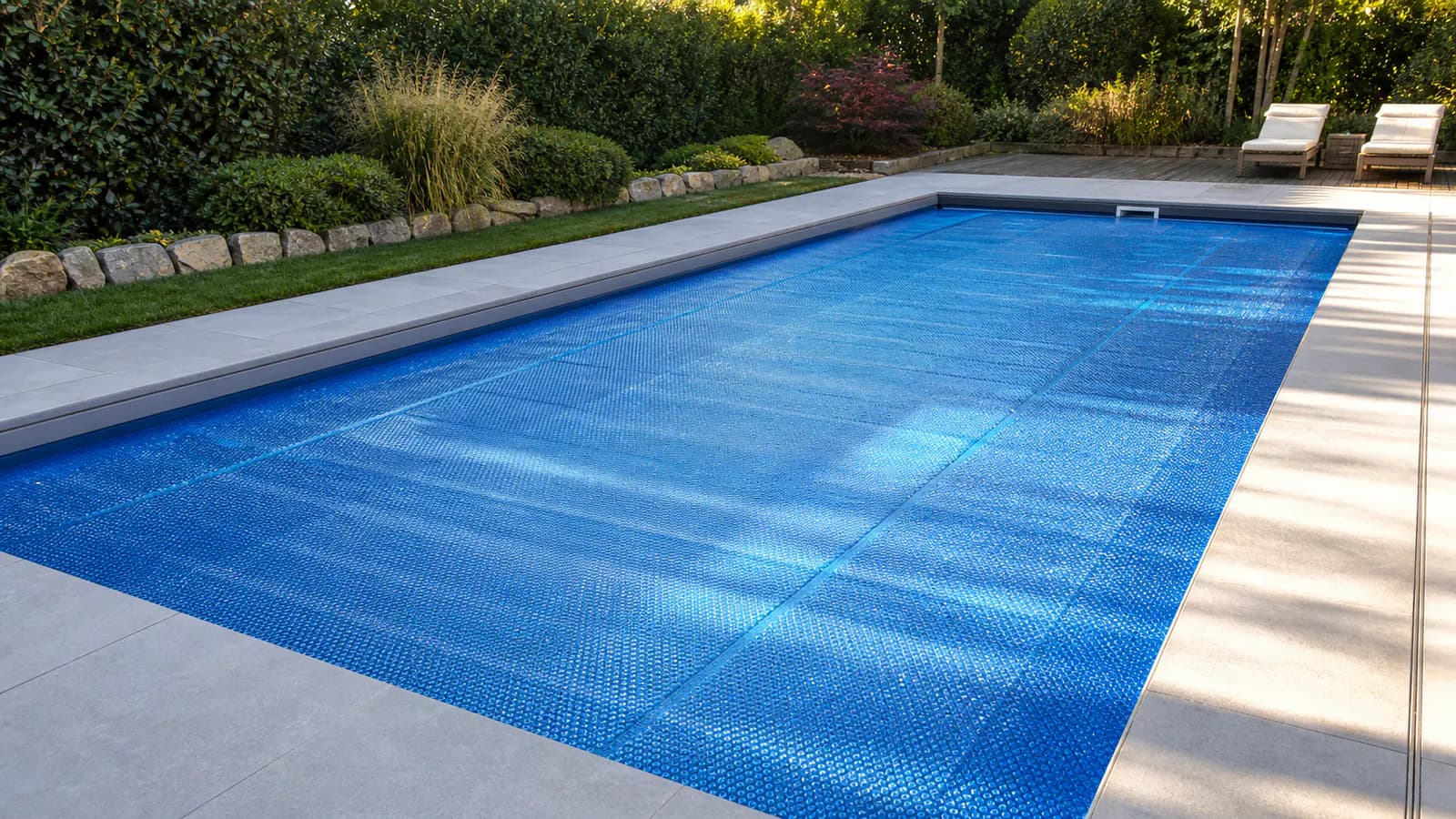
A bubble-style solar blanket floats directly on the water. Its main benefit is reducing evaporation and overnight cooling, not dramatic heating. Put it back after swimming and the heater has less lost heat to replace next day, while less dust, pollen and leaves reach the water. Small blankets can be handled by hand; larger ones often need a reel if you are to use them consistently.
A thicker thermal cover slows heat loss more effectively, but is heavier and takes up more space. Before buying, check how it rolls up, where it will sit while you swim and whether one person can put it back. An awkward cover often stays off just when it would help most, on a cold night or windy day.
For summer use, ease of handling matters as much as the material: the benefit depends on how consistently you cover the pool.
A solar blanket is not a solar heating system
The word solar can raise the wrong expectations. A bubble blanket may warm in sunshine, but its main job is to separate the water from the air and reduce evaporation. Solar collectors work differently: a pump sends water through sun-warmed panels to heat it. A cover therefore does not replace collectors or a heat pump when you want a particular temperature and a longer season.
A cover is still useful with almost any heater. Paying to heat water and then leaving it uncovered through a cold, windy night wastes energy. If heating is slow, first check how regularly the pool is covered, its exposure to wind and the temperature drop overnight. These observations are often more useful than guesswork.
What does a winter cover do?
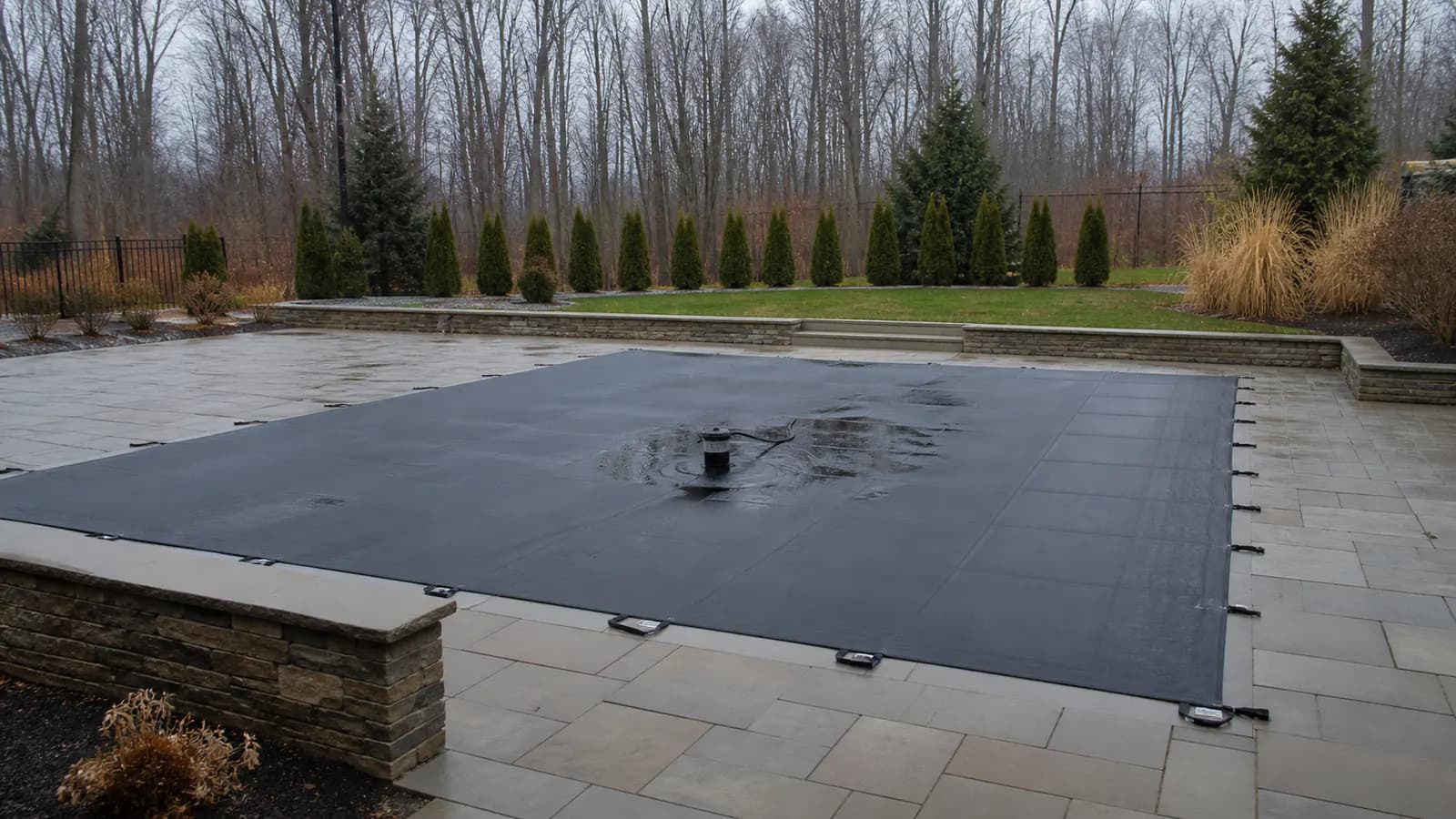
A solid winter cover keeps out light and much of the debris. This can make spring opening easier, but rain and melted snow collect on top. Remove that water as the manufacturer directs and periodically check tension, cables and supports. Do not allow a large volume of water to build up.
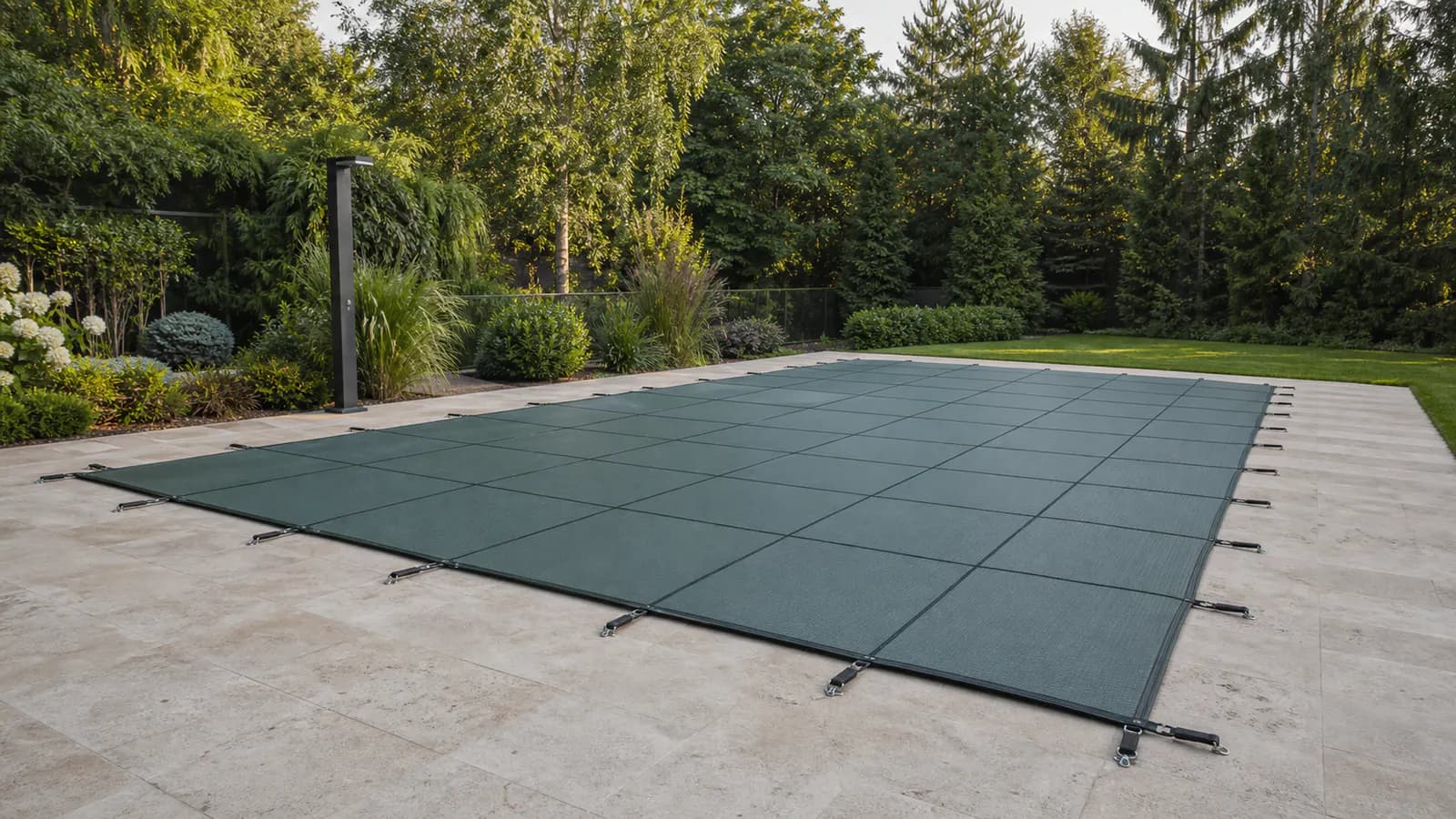
A mesh winter cover lets rain through while trapping leaves and larger debris. This reduces the work of removing water from the cover, although fine particles and light may reach the pool more easily. Choose according to climate, nearby trees, water winterisation and the surrounding structure. Check exact dimensions, fixings and intended loads before buying either type.
A winter cover still needs attention between autumn closing and spring opening.
Check that a safety cover is tested for that purpose
An ordinary solar blanket does not protect against falling into the water. A person or animal falling onto flexible sheeting can become trapped in the water. Only a system designed and tested for safety, suitable for the specific pool and correctly installed should be treated as a safety cover. A sturdy appearance, taut mesh or advertising claim is not enough.
A safety cover is one layer of protection. Fencing, a self-closing gate, controlled access and direct supervision of children remain essential. Ask which standard the product was tested to, how it is anchored, its permitted load and inspection procedure. If it must provide safety protection, improvised fixings around the pool edge are not acceptable.
Plan an automatic slatted cover with the pool
A slatted cover opens quickly, making it more likely that you will close the pool after each swim. That convenience is its main advantage. The reel can be above ground or concealed in a recess. For a new pool, plan the reel, drive, power supply, drainage and servicing access before finishing the construction. Retrofitting is possible, but often involves compromises in space and appearance.
Not all slatted covers are safety covers, and not every automatic system can carry a person or a snow load. Check the exact specification, locking method and operation during a power cut. Also check replacement slats, motor servicing and manual opening if the drive fails. An automatic system is easier to use daily, but its drive and mechanism still need regular maintenance.
What to check in the quotation
Record the pool's internal dimensions and the shape of steps, overflow edges and irregular sections. Decide where the reel will stand and whether it obstructs access. For a manually removed cover, consider its wet weight, not just the boxed product's weight. Ask about cleaning, resistance to chlorine and sunlight, storage and replaceable parts.
Distinguish the cover price from the complete system price. Reels, anchors, tracks, recesses, electrical connections, fitting and servicing can change the total substantially. A basic blanket may be a good choice for a small seasonal pool. An automatic cover makes sense when easy opening and closing mean you will actually use it every day. Choose for the purpose and routine, not price alone.
For a made-to-measure cover, establish who measures the pool and who is responsible for errors. For anchored or motorised systems, obtain operating instructions, an installation record and clear servicing contact details. Photographs taken before the deck is finished can help when replacing tracks, cables or mechanisms later.
Before buying, answer four questions: what must the cover do, who will handle it, where will it be stored and how will it be maintained?