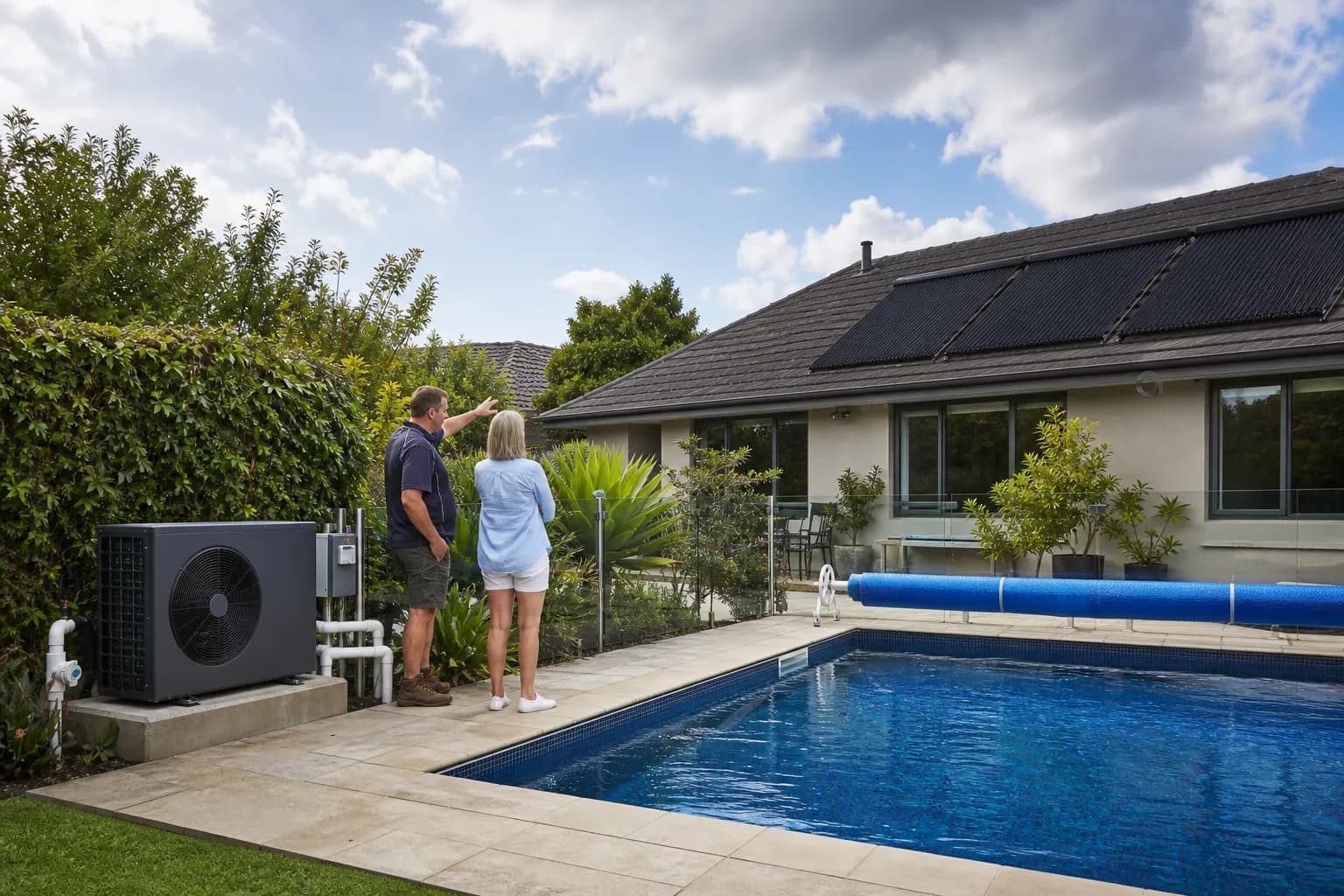
How heat pumps and solar pool heating compare
A heat pump is a better fit if you want a more consistent temperature and a longer season. Solar heating makes sense with a large sunny area and acceptance that output depends on the weather. A cover substantially reduces heat loss with either system.
Written and edited by: Pool Explained editorial team
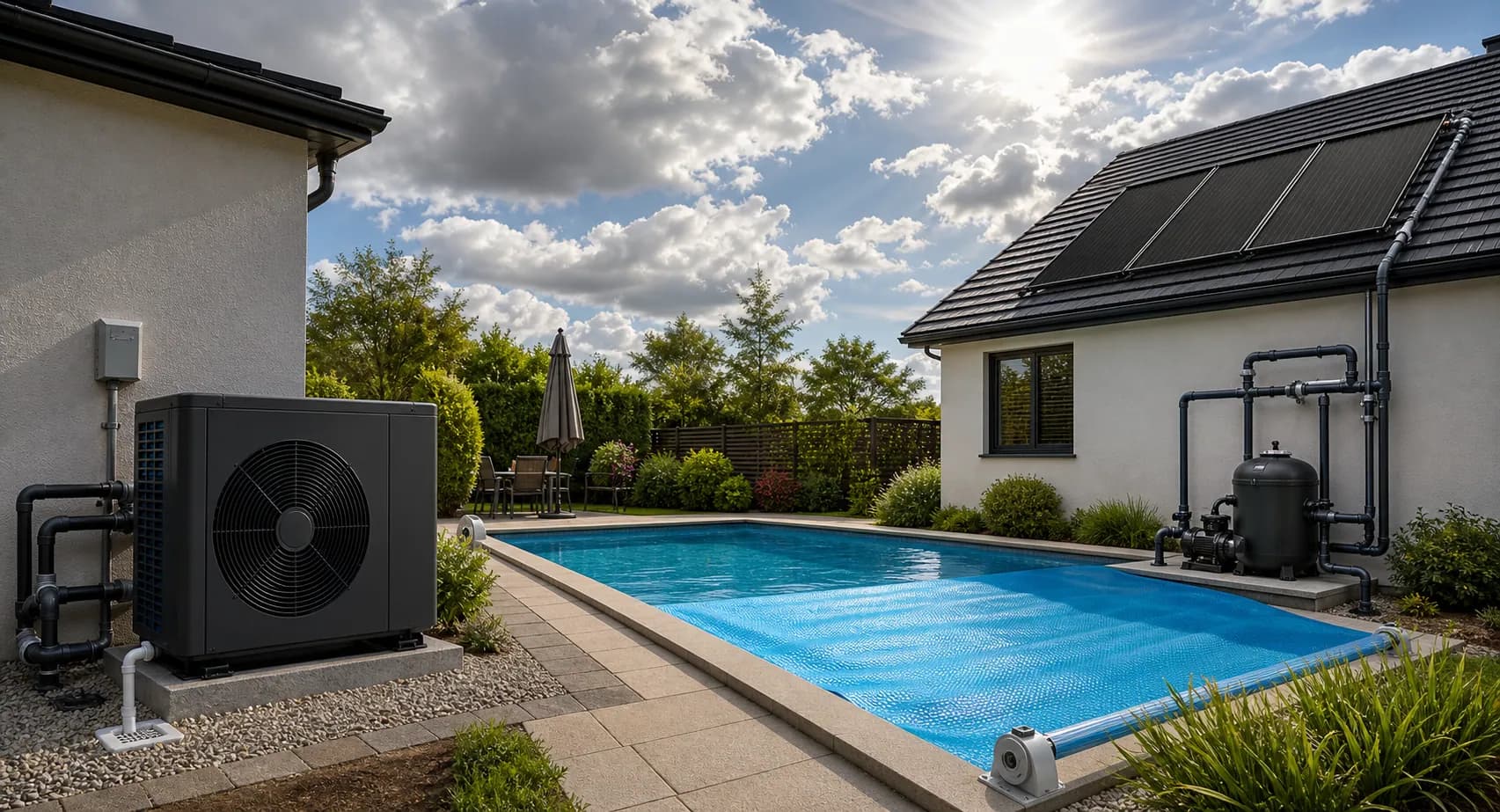
How the two systems heat water
A heat pump transfers heat from outdoor air into pool water. It uses electricity but, in favourable conditions, supplies more heat energy than the electrical energy it consumes. Performance depends on air temperature and humidity, water temperature and flow. Catalogue figures apply at stated test conditions, not equally throughout the season.
In a solar system, pool water passes through collectors warmed by the sun. The circulation pump and controls use some energy, but without enough solar radiation there is little useful heating. A particular temperature on a chosen day therefore cannot be guaranteed. Water warms gradually when collector positioning, area and weather are favourable.
A heat pump offers more control over temperature
If you want the water to stay near a chosen temperature for much of the season, a heat pump gives you more control. It can operate without direct sunshine while outdoor conditions remain within its working range. This matters if your family swims to a schedule rather than waiting for consecutive sunny days.
A heat pump does not perform equally well in all conditions. Cold air reduces output, prolongs heating and increases electricity use. Installation needs unrestricted airflow, condensate drainage, a suitable electrical supply and a location where noise will not disturb people. Ask for output data at the temperatures expected at the start and end of your season.
A heat pump can control temperature more reliably only when correctly sized for the pool and expected outdoor conditions.
Solar heating needs enough sunny collector space
Effective solar heating requires a sufficiently large area with little prolonged shade. Orientation, slope and distance from the pool affect performance. An undersized array may add some warmth in peak summer but struggle in changeable spring weather. Do not size collectors solely to whatever roof space is left.
Automatic controls compare collector and pool temperatures and send water through the collectors only when they are warm enough. Otherwise, a system could cool the pool in cold weather or at night. The roof must support the installation and allow safe servicing. Check wind loads, roof penetrations, pipe length, winter drainage and provision to isolate the collectors.
Include a cover in your heating budget
Much of the heat loss occurs at the exposed water surface, particularly through evaporation and wind. Left uncovered through a cold night, a pool can lose much of the heat added during the day. The heater may appear undersized when excessive ongoing heat loss is the real issue.
A solar blanket or thermal cover does not heat like collectors or a heat pump, but reduces the heat that must be replaced. Before choosing a system, measure overnight temperature drops with and without a cover. For many seasonal pools, an easy-to-use cover may be more useful than buying a larger heater to compensate for avoidable losses.
Compare costs for the whole season, not just the purchase
A heat pump usually involves greater spending on the unit, electrical work and installation, followed by electricity costs in use. Solar collectors need suitable space, pipes, valves, controls and work on the roof or mounting structure. A cheap kit with too few collectors is not good value if it cannot provide the heating you expect.
Allow for the number of weeks you want to swim, target temperature, energy prices, servicing and expected component life. For a heat pump, ask about cold-weather performance and warranty terms. For solar heating, request an assessment of sunshine, collector area and expected contribution. Maximum output or ideal savings alone are not enough to make a decision.
Choose for the way you use your pool
If you swim in good weather and have a flexible schedule, solar heating can make warm periods more enjoyable at a low running cost. For a chosen weekend temperature, morning swims or a longer season, a heat pump is more dependable. With a small seasonal pool, you might start with a good cover and monitor temperatures for a few weeks before investing further.
You can combine the two: solar collectors heat when sunshine is sufficient, and a heat pump supplies the shortfall. This makes sense only with suitable controls and a clear cost assessment. Whichever you choose, check volume, surface area, wind exposure, flow through the heater and electrical or construction requirements. Selecting a unit is only part of the job; establish how it will work with the existing circulation and pipework.
Before deciding, record water and air temperatures for two or three weeks. Note cover use, sunshine and swimming times too. This shows how quickly the pool gains and loses heat on your property. The designer can then work from actual site conditions rather than assumptions about an average pool.
Ask for the expected heating time, the conditions used in the estimate and operating limits. For a heat pump, check output in colder air, electrical requirements and noise. For solar heating, check useful collector area, shade and controls. Figures based on different assumptions cannot be compared fairly. Have both quotations use the same season, water temperature and cover habits. Check exclusions carefully, including electrical work, supports, controls, bypass valves and commissioning.
Choose a heat pump when temperature control matters most, or solar heating when the site is suitable and swimming can follow the weather. A cover helps with either.