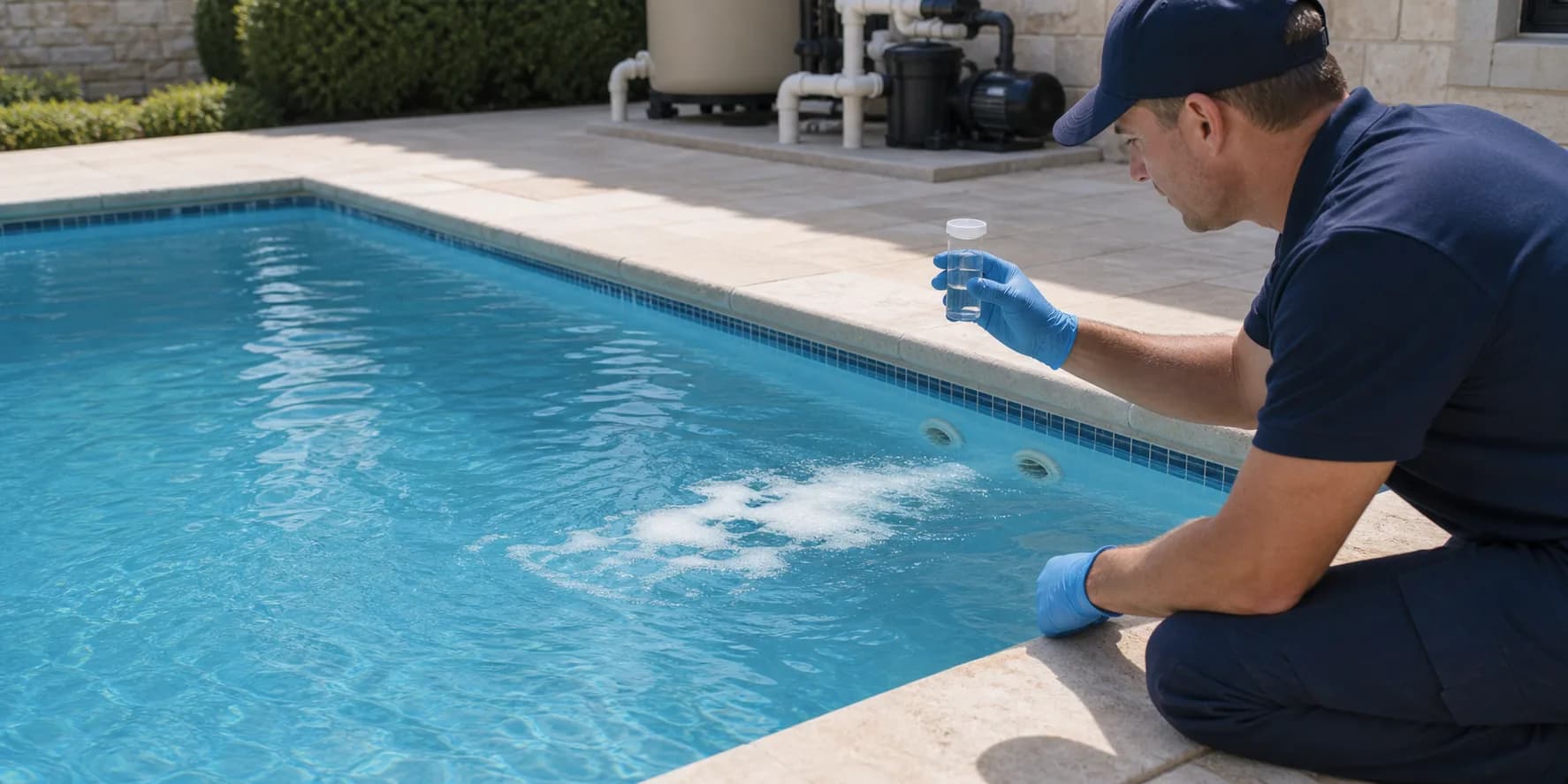
How to get rid of foam in a pool or hot tub
If bubbles disappear quickly when you turn off the jets, they are probably just air. Persistent foam is more often caused by cosmetics, body oils, detergent, organic debris or water that needs changing in a small hot tub.
Written and edited by: Pool Explained editorial team
Check whether it is foam or just air bubbles
Turn off the air jets and let the surface settle. Ordinary bubbles burst quickly. Persistent foam stays around the edges and forms again as soon as the water is agitated.
Foam alone cannot tell you whether the water is safe. Test pH and the sanitiser level. If the water is also cloudy, smells unusual, the surfaces are slippery or bathers experience irritation, stop using the pool until you find the cause.
Work out what has entered the water
Think about what changed just before the foam appeared: more bathers, a new lotion, swimwear washed with too much detergent, a cover-cleaning product or a new water treatment. In a hot tub, the small volume and high temperature can make the effects noticeable very quickly.
Look for a greasy waterline and inspect the baskets, filter and cover. If residue remains on the surfaces or the filter is not working properly, an anti-foam product may improve the appearance only briefly.
Remove the cause and clean the system
Clean the baskets and filter as instructed, wipe the waterline with a cleaner suitable for the pool surface and rinse the cover with clean water. After heavy use, extend filtration if necessary.
If old hot tub water quickly foams again despite satisfactory test results and a clean filter, changing the water is often the simplest solution. Do not drain a large or in-ground pool without checking the structure, groundwater conditions and the manufacturer's procedure.
Showering before swimming and rinsing swimwear without fabric conditioner substantially reduce the substances that can later cause foam.