Pool Explained
SR
Pool types

Equipment and hot-water care

What to check before buying a hot tub or spa

A spa is not simply a small pool. Water chemistry changes faster in a small volume of warm water. Powerful pumps and airborne droplets also make maintenance, ventilation and safety especially important.

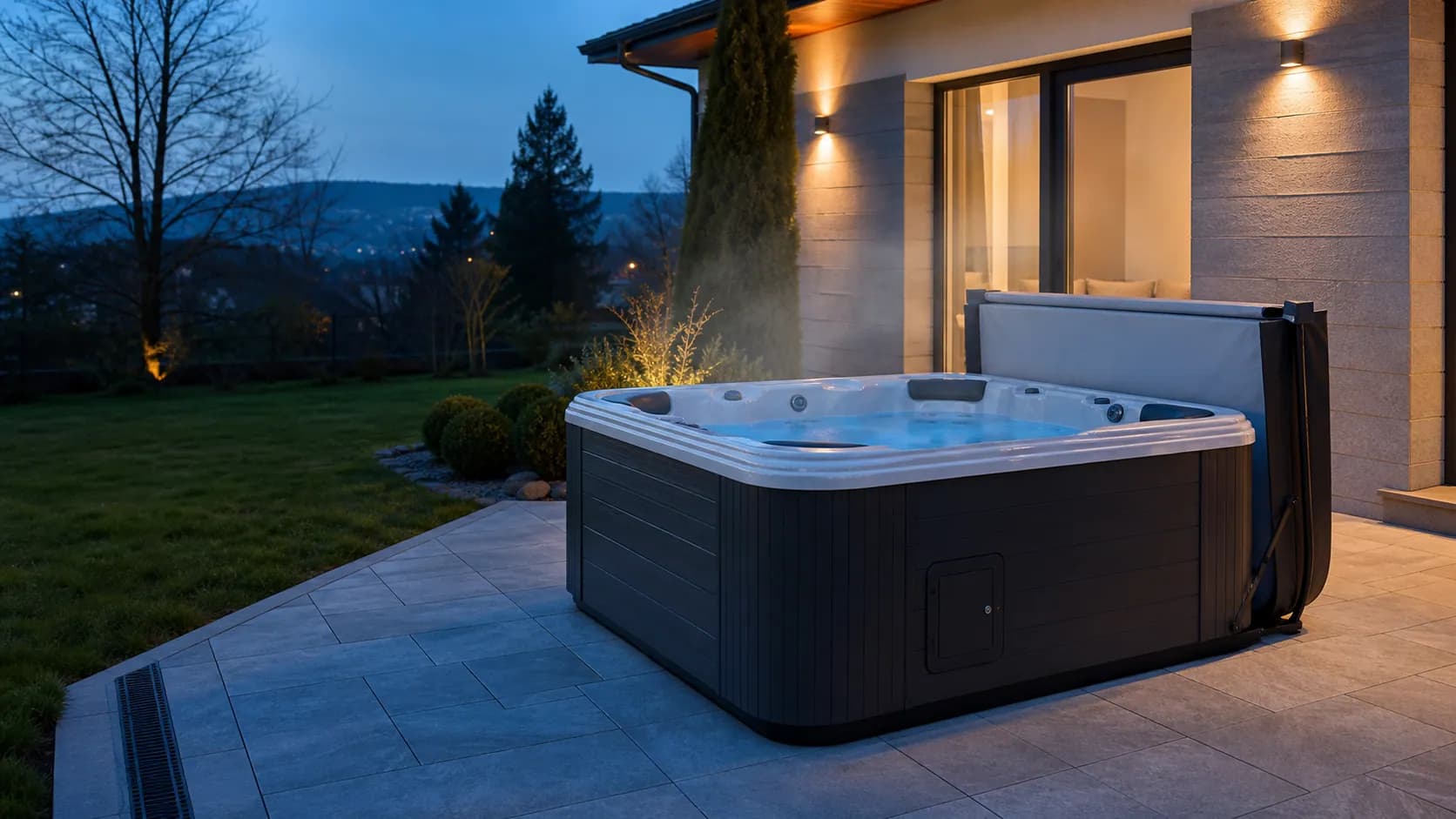
Domestic spa correctly installed on a level terrace with an insulated cover

Types of hot tub and spa

Which type fits your space?

Portable rigid-shell spas, inflatable hot tubs, built-in spas and swim spas differ in installation, equipment, running costs and maintenance.

Portable rigid-shell spa

The factory-made acrylic or composite shell, cabinet and equipment arrive as one working unit. This usually simplifies installation and servicing, but ‘portable’ does not mean it can be moved while full. It still needs a level load-bearing base, a suitable electrical supply and accessible service panels.

Inflatable hot tub

Usually the least expensive option to buy, and easy to store after the season. Most have less insulation, shallower seating and air bubbles rather than powerful water jets. Check operating temperature limits, actual heating capacity and replacement filter availability.

Built-in spa

Designed as part of a home or pool project, with separate plant equipment. Shapes and finishes can be customised, but the design must cover structural support, waterproofing, circulation, drainage, ventilation and access to every pump, valve and connection.

Swim spa

An elongated unit with a current for swimming and a seating area. Some have two compartments kept at different temperatures. The greater water volume, pump power and weight require a suitable foundation, electrical supply, delivery or crane access and careful positioning.

How the system works

Circulation, filtration and massage jets

In a well-designed spa, the shell, insulation, cover, pipework and controls are specified together. More pipes and jets do not automatically mean better performance.

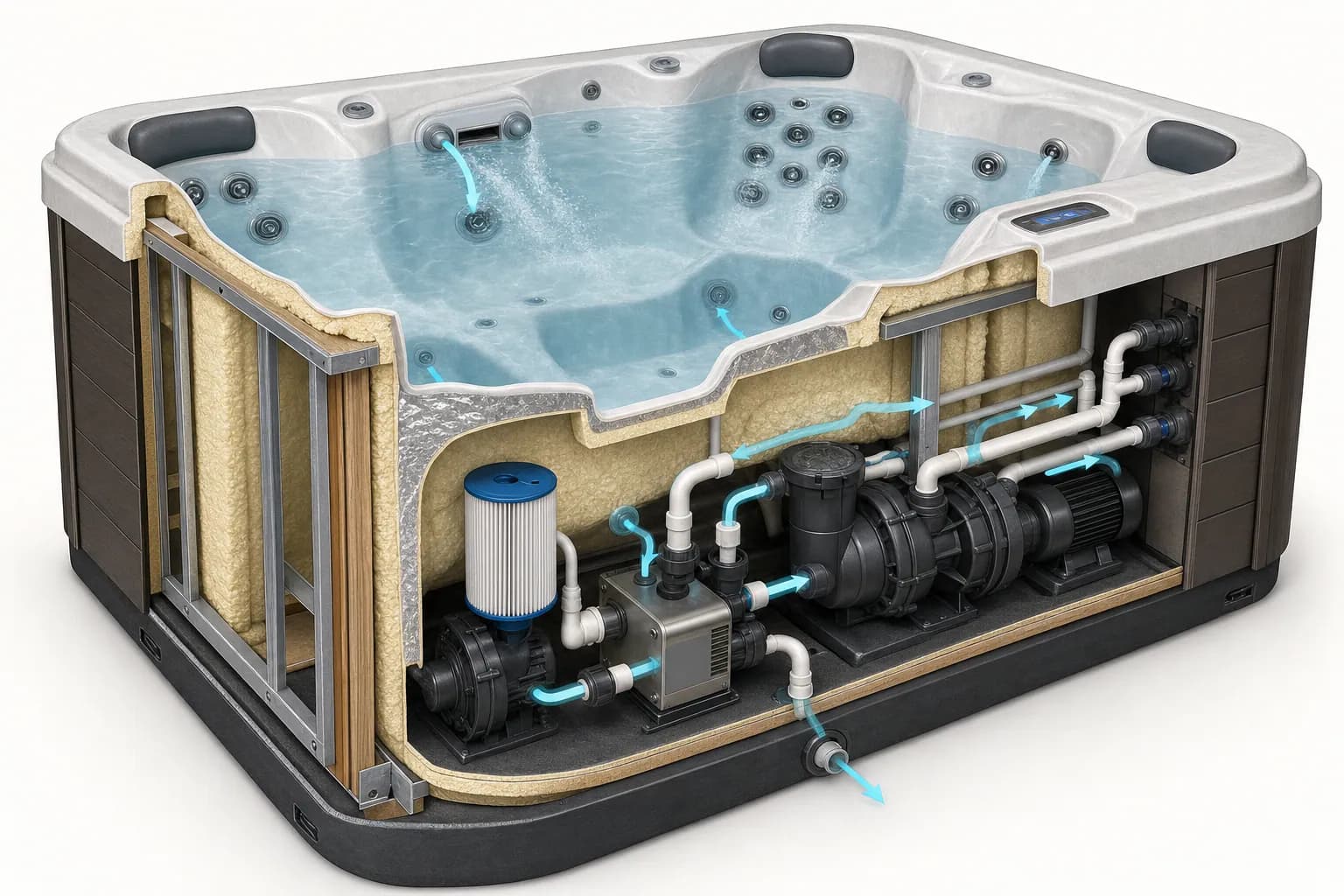
Spa cutaway showing the shell, insulation, filter, pumps, heater and pipework

Shell and supporting structure

A thermoformed acrylic surface is usually reinforced with a composite layer and supported by a frame or base. A glossy finish is not proof of quality. Ask about reinforcement, protection against blistering or delamination, warranty terms and how the filled shell is supported.

Insulation

Full-foam insulation around the shell and pipes reduces heat loss and can support the plumbing, but may make leaks harder to find. An insulated cabinet leaves pipes more accessible. Check the continuity of the insulation, wind protection and base rather than relying on a marketing name.

Suction, filtration and circulation

Water passes through protected suction fittings and a surface skimmer, then through a cartridge filter, pump and heater before returning to the shell. Some systems use a small circulation pump for long periods; others run programmed filtration cycles with the main pump.

Water jets and air

A jet pump moves the water, while a Venturi inlet draws in air to change the feel of the jet. Jet count alone tells you little. Check flow in each active zone, jet position, adjustment options and seating comfort.

Ask whether filtration continues when the massage pumps are off and what flow the heater requires. Adding air makes jets feel stronger but also cools the water faster and increases evaporation. Do not force diverter valves at full flow unless the instructions allow it. Try the seating in a display model: the same jet height will not suit everyone.

Location

What to check before installation

A filled spa is heavy, produces moisture and periodically needs draining. Check foundation strength, drainage, ventilation, delivery access and servicing space.

Weight and foundations

Add the dry unit weight, water weight and maximum permitted occupant load. A qualified professional must check any terrace, balcony or timber deck. The base must be level, strong enough and built to the model’s installation requirements.

Filling and draining

Before installation, decide where drained water can safely go. Consider local discharge rules, neighbouring land, plants, drains and the risk of ice in cold weather.

Noise and privacy

Pumps can transmit vibration through lightweight structures, and voices carry at night. Consider bedrooms and neighbours, ask about circulation settings and never block cabinet ventilation to reduce noise.

Delivery and servicing

Measure gates, corners, overhead obstructions and changes in level. Leave enough room to remove every service panel and eventually replace a pump or the whole unit.

An indoor spa needs a purpose-designed room

Warm water and jets produce substantial water vapour and aerosols. A specialist should design ventilation and dehumidification, airflow across cold surfaces, moisture-resistant finishes, a vapour barrier, a floor drain and service access. CDC guidance for indoor public spas discusses separate air handling and dehumidification to control aerosols. Domestic installations also need moisture control, designed by a qualified local professional.

Heating and the cover

What affects electricity use?

The heater replaces heat lost through evaporation, the cover, shell and pipes. Monthly energy use therefore depends on climate, location, water temperature and how the spa is used.

Keep the insulated cover in place

A dry, undamaged, well-fitting insulated cover can substantially reduce heating demand. Check the core density and thickness, hinge seal, vapour barrier, locks and availability of replacement covers.

Shelter the spa from wind

Cold air, wind, rain, snow and frequent uncovering increase heat loss. The same spa can use different amounts of energy in a sheltered corner and on an exposed terrace, even at the same air temperature.

How your use affects energy consumption

Higher water temperatures, longer uncovered sessions and strong air injection increase heating demand. If you use the spa regularly, allowing it to cool substantially and reheating it is not necessarily cheaper.

Ask how energy use was tested

Ask the supplier for the water and air temperatures, wind conditions, operating cycles, electricity tariff and test standard used. At home, monitor the spa’s own electricity use in kWh over several weeks.

Use a suitable lifter to remove the cover and do not sit on it. A waterlogged core becomes heavy and insulates poorly. Cracks, a damaged vapour barrier or a poor fit call for repair or replacement. An energy-cost estimate is of little use without the climate, location and electricity tariff.

Electrical safety

Have a qualified electrician design the supply

Requirements depend on the model and local regulations. A factory-fitted cable or stated power rating is not permission to improvise the connection.

Before delivery

A qualified electrician must check the dedicated circuit, cable size, earthing, bonding, residual-current or ground-fault protection, maintenance isolation and required separation distances. The equipment rating plate, manufacturer’s diagram and local rules determine the installation.

During use

Test protective devices only as instructed and at the specified intervals. Do not open an energised cabinet or bypass a device that trips. CPSC advises that electrical equipment near water should be inspected and repaired by qualified professionals.

Hot tub water hygiene

Clear water is not proof that it is safe

Hot tubs operate at temperatures favourable to Legionella growth, and jets produce droplets that can be inhaled. A small water volume and heavy use can quickly use up disinfectant.

Before getting in

Shower to remove sweat, cosmetics and oils that use up disinfectant. Do not use the spa if you have diarrhoea or an open infection, or if your doctor has advised against hot-water immersion.

Test before adjusting the water

For domestic hot tubs, CDC guidance specifies pH 7.0–7.8 and at least 3 ppm free chlorine, or at least 4 ppm bromine. A DPD test kit is more accurate than strips. Follow the spa instructions, chemical label and applicable local requirements for the actual treatment procedure.

Filter condition and flow

Rinse the cartridge as instructed, periodically deep-clean it with a compatible product and replace it if the fibres harden, become distorted or flow remains poor. Do not run the spa without its filter just because the water looks clear.

Surfaces and biofilm

Clean the waterline with a mild, compatible product. Whenever the spa is drained, clean the shell, headrests and accessible parts. CDC identifies sediment and biofilm as conditions that can support Legionella growth.

After filling

Fill with potable water through the point recommended by the manufacturer to reduce airlock risk. Start circulation, take initial readings and adjust the water in the specified order. Add chemicals separately, never mix them in a container and leave the cover open whenever the treatment instructions require ventilation.

Draining and maintenance

Routine spa maintenance

The schedule depends on bather numbers, test results, filter condition and the manufacturer’s instructions.

Weekly checks

Test before and after heavy use, check clarity and smell, wipe the waterline and inspect water level, flow, the cover and the area around the spa. A strong ‘chlorine smell’ is not proof of effective treatment.

At scheduled intervals

Clean the filter according to pressure or flow and the instructions. Inspect jets and the service compartment, look for moisture and record chemical doses. Foam that quickly returns may indicate that a water change is due.

When changing the water

Isolate the power, drain to an approved location, clean the shell and filter, and refill as instructed. Use only an approved procedure to clean internal pipework. Repair leaks before refilling.

If the spa will be unattended or exposed to frost, follow the exact manufacturer procedure. Draining the shell does not necessarily empty the heater, pumps or low points in pipes. Water left behind can freeze and damage the equipment.

Bather safety

Using a hot tub safely

40°C is an upper limit, not a recommended temperature for everyone. Appropriate temperature and time in the water depend on the person and their health.

  1. 1Never set the water above 40°C. Lower temperatures and shorter sessions are more appropriate for people sensitive to heat. Pregnant people and anyone with heart, circulatory or other health conditions should seek medical advice before use.
  2. 2Children require direct adult supervision. A locking cover restricts access but does not replace supervision and may not meet local safety-barrier requirements.
  3. 3Alcohol, sedatives and other substances increase the risk of drowsiness, overheating and drowning. Get out immediately if you feel dizzy, nauseous, weak or short of breath.
  4. 4Keep your body and hair away from suction fittings. Covers must be intact, securely fitted and rated for the system’s flow. Do not use the spa if a suction cover is damaged or missing.
  5. 5Keep mains-powered appliances, speakers and extension leads out of the wet area. If you feel tingling or suspect an electrical fault, do not enter the water. Isolate the supply from a safe location and call a qualified professional.
  6. 6Temperature, disinfectant levels and water clarity are not the only safety checks. Covers, steps, handrails, lighting, slip-resistant surfaces and access to a phone in an emergency also matter.

Reviewing the quote

Your pre-purchase checklist

Compare quotes item by item. Ask for written details of installation, noise, energy use, warranties and service availability.

1.exact water volume, dry and filled weights, base dimensions, and requirements for level and load-bearing support

2.pump types and number, filtration schedule, actual heater output and the model’s electrical requirements

3.shell cross-section and insulation details for the shell, base and cover, not just a package name

4.plumbing diagram, protected suction fittings, and availability of original jets, valves and filters

5.separate written warranty terms for the shell, surface, equipment, cover and service labour

6.who arranges unloading, a crane, positioning, electrical work, commissioning and owner training

7.minimum service clearance and confirmation that surrounding finishes will not block panels or the drain

8.local servicing, response times and realistic parts availability after the warranty expires

FAQ

Hot tub and spa questions answered

Is a spa the same as a whirlpool bath?

Suppliers sometimes use overlapping names. This guide covers recirculating spas that filter and treat the same water between uses, not bathroom whirlpool baths filled and drained for each bath.

How many people can comfortably fit?

Do not rely only on the model’s stated capacity. Sit in a dry display model with the people who will use it. Check foot space, seat depth, ease of exit, loungers and jet positions.

How much electricity does a hot tub use?

There is no single figure for every model. Energy use depends on climate, wind, water temperature, insulation, the cover, water volume, pump settings and how often you use it. Compare tests with clearly stated conditions, measure your own use in kWh and apply your electricity tariff.

Should I keep it warm all the time?

For frequent use, a steady, moderately reduced temperature can be practical. For longer absences, use a manufacturer-approved setting. Do not switch the system off in freezing conditions without following the correct procedure: trapped water can freeze and damage pipes and equipment.

Chlorine or bromine?

Either can be suitable if approved for your spa and used correctly. Bromine is common in hot tubs, but the choice depends on the equipment, available products and manufacturer’s instructions. Do not mix products or change treatment systems without following the required draining and cleaning procedure.

How often should I change the water?

There is no schedule that suits every household. It depends on volume, bather numbers, showering, water chemistry and dissolved solids. Change the water sooner if you cannot maintain stable readings, smell, foam or cloudiness develops, or the manufacturer requires it.

Can I install a spa indoors?

Only in a space designed for the moisture load. It needs a vapour barrier, water-resistant finishes, a floor drain, dehumidification and ventilation to control condensation and aerosols, together with structural and electrical design.

Can a swim spa replace a swimming pool?

It can suit resistance swimming and year-round use in a smaller space. However, the swimming experience, width, depth and room for several swimmers differ from a pool. Test the swimming current before buying.